

Buyers often assume panel prices follow a manufacturer’s price list. In reality they follow three commodity curves that have nothing to do with acoustics: recycled PET feedstock, timber and board supply, and container freight. Understanding those curves — and how each one reaches a panel quotation — is the difference between a procurement plan and a series of unpleasant surprises. This is not a forecast of numbers, which would be out of date before publication, but a map of the mechanisms that will set your 2027 costs.
Driver one: recycled PET feedstock
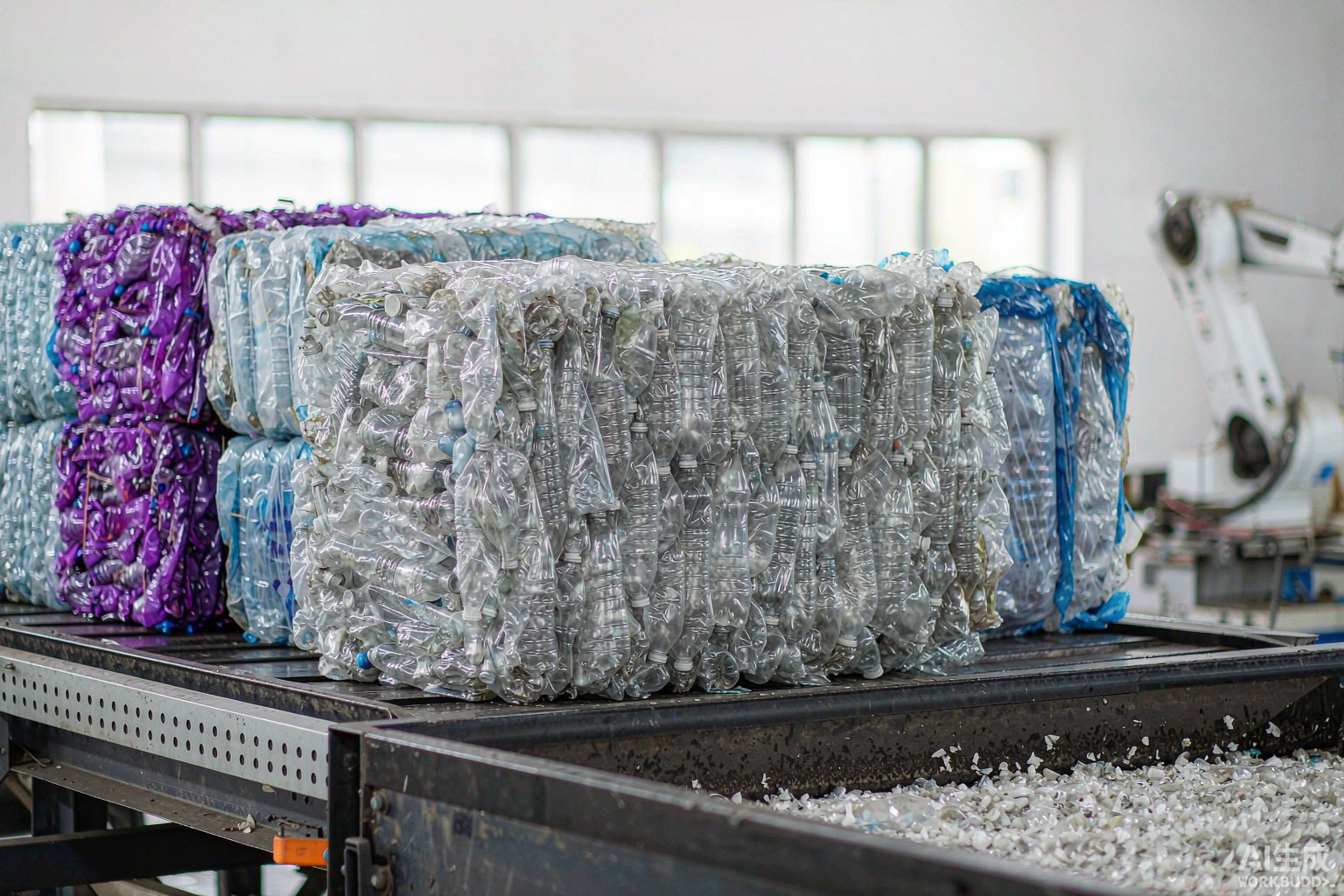
PET felt is made from recycled bottle flake, and that flake competes for supply with the beverage industry’s own recycled-content commitments. When brand owners raise their recycled-content targets, they bid for the same bales that panel manufacturers buy, and flake prices rise irrespective of construction demand. The mechanism is worth understanding because it explains a pattern buyers find counterintuitive: panel prices can rise in a weak construction market, simply because a global beverage company announced a packaging commitment.
Two secondary effects follow. First, colour: clear and light flake commands a premium, so pale panels carry more feedstock risk than dark ones, and dark colours can absorb lower-grade recycled streams. Second, certification: chain-of-custody documentation for recycled content has become a cost in itself, and suppliers who carry it properly price the administrative burden. Buyers comparing quotations should ask what recycled-content percentage each price assumes, because a 60 percent and an 85 percent panel are not the same product and should not be compared as if they were.
Driver two: timber, veneer and board
Wood slat panels carry a different exposure. The slats themselves depend on veneer and lumber supply, and the substrate depends on MDF or plywood, both of which track regional timber harvests, energy costs for drying and pressing, and formaldehyde regulation. When a major production region tightens formaldehyde limits, compliant board becomes scarcer and more expensive before it becomes standard, and that transition cost appears in panel prices for a year or more.
Veneer adds a quality dimension to a price movement. A quotation for “oak veneer slat panel” may be based on a commodity grade or a selected grade, and in a tight market the commodity grade is what most suppliers can actually deliver. Buyers who specify the grade, the cut, and the acceptable colour range protect themselves twice: they get the appearance they designed, and they can tell whether a price change reflects the market or a downgrade hidden in the specification.
Driver three: energy and freight
Felt production is energy-intensive at the pressing stage, so industrial electricity and gas prices feed directly into cost per square metre. This is why panel prices moved sharply in regions with volatile energy markets and stayed flat in regions with stable industrial tariffs — a difference that rarely appears in a quotation but always appears in a landed cost comparison.
Freight is the most visible and least predictable of the three. Container rates on major trade lanes can double within a quarter, and panel products are volumetric rather than heavy, so they pay for space rather than weight. That has two practical consequences: consolidation matters more than ever (a mixed container of panels, baffles, and accessories typically reduces per-square-metre freight by 15 to 25 percent), and lead-time planning becomes a cost strategy, because booking space six weeks ahead is cheaper than booking it six days ahead.
What buyers should actually do about it
Three procurement behaviours consistently reduce exposure. First, separate the price into material, conversion, and freight when you negotiate, so movements can be discussed against the driver that caused them rather than applied as a blanket increase. Second, fix a rolling six-month volume agreement with a defined review mechanism — most manufacturers will hold a price for a committed volume even when the spot market moves, because their own input contracts reward predictability. Third, qualify a second source early, not when the first one raises a price; the cost of qualifying an alternative is a fraction of the cost of being unable to switch.
For projects with long delivery windows, an escalation clause is often better than a fixed price. A clause that adjusts only the material component, only in the direction the index moved, and only beyond a threshold of, say, three percent, is fair to both sides and keeps the relationship out of the annual renegotiation cycle. Clients accept it because the alternative is a risk premium built into every bid.
The planning conclusion
Panel prices in 2027 will be decided by recycled flake availability, timber and board regulation, energy tariffs, and container capacity — in roughly that order of impact for felt products, and with timber first for slat products. None of those drivers respond to negotiation tactics at the point of order. They respond to planning: committed volumes, qualified alternates, consolidated shipments, and specifications written around what the market can actually deliver rather than what a catalogue promised last year. Buyers who build those four habits into their annual cycle spend less time arguing about price and more time winning projects with it.
How to read a price increase letter
When a supplier announces an increase, the useful question is which driver moved and by how much. A letter citing recycled flake should be accompanied by a date and a percentage, and a buyer can check the direction against public recycled-PET indices. A letter citing energy should distinguish between electricity and gas and name the market. A letter citing freight should reference a lane and a period. Suppliers who can answer these questions are managing costs; suppliers who cannot are testing the market’s tolerance.
Buyers have more leverage than they often use. A committed volume across six months, a consolidated shipment schedule, and a willingness to accept a standard colour from stock rather than a custom batch each remove cost from the supplier’s side of the equation, and most manufacturers will share part of that saving rather than lose the volume. The negotiation that works is not pressure on price but reduction of the uncertainty the supplier is pricing.
A practical tool is a simple cost model held by the buyer: material at a stated percentage of the price, conversion at another, freight at a third. Even approximate weightings let a buyer test whether a proposed increase is plausible. If material is 45 percent of the price and flake has risen 10 percent, the defensible increase is around four and a half percent, not twelve. Suppliers respect buyers who do this arithmetic, because it signals that the conversation will be about facts.
Finally, plan for the possibility that a price is not the variable to negotiate. Delivery reliability, colour consistency, and documentation quality are worth more than a few percent in most projects, and a supplier who is asked to hold price often protects margin by reducing one of those instead. Buyers who name what they value — and pay for it — get a more predictable supply relationship than those who optimise the line item.