
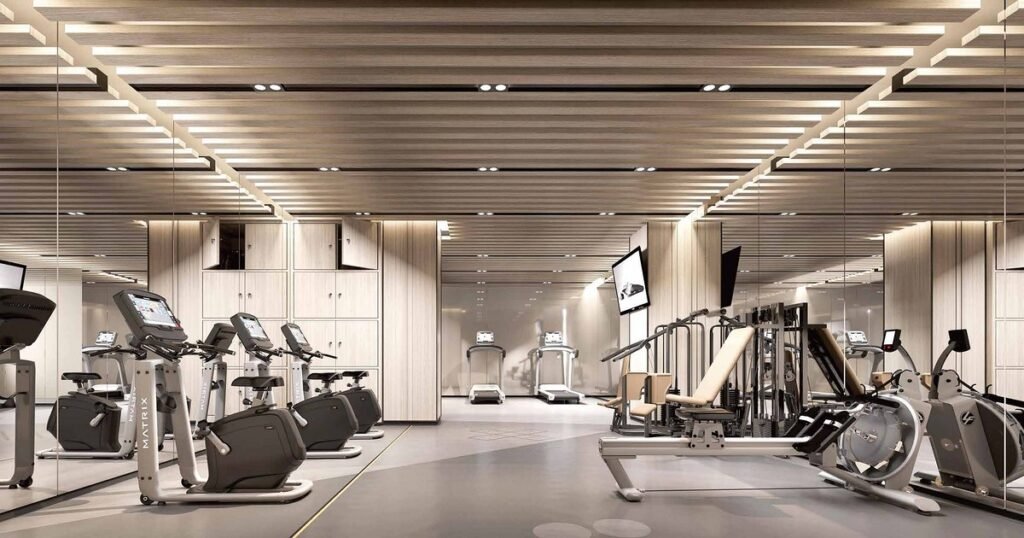
A room can pass its reverberation test and still feel wrong. The consultant signs off the RT60, the panels go up, and the client says the space sounds airless and dead — or, at the opposite extreme, that a hard slap still bounces off the rear wall. Both complaints come from the same error: treating every surface as if it needed the same thing. The question of sound absorption vs diffusion diffusers is not which product is better. It is deciding, surface by surface, where energy should be removed and where scattered. Get that balance right and a room feels open and intelligible at once; get it wrong and no amount of extra panel area helps.
This guide is for those who sign off the specification: acoustic consultants, architects, main contractors, distributors and procurement managers. It covers what each treatment does, how room size and listening distance change the decision, how to read a QRD diffuser, where each belongs, indicative ratios and how to verify the result. It is supplier-side, not consumer studio advice. All figures are indicative planning guidance; final performance and terms must come from project data and the formal quotation.
What sound absorption vs diffusion diffusers actually do
Absorption and diffusion solve different problems, and confusing them causes most disappointing rooms. A porous absorber — PET felt, mineral wool, fabric-wrapped or a slatted panel with felt backing — lets air move through its fibres and converts sound energy into heat. It removes energy, shortening reverberation, reducing late reflections and improving speech clarity and privacy. Performance is described by an absorption coefficient by frequency band, or a single-number rating such as NRC.
A diffuser does almost the opposite in energy terms. A QRD (quadratic residue diffuser) or MLS (maximum length sequence) surface uses a sequence of wells that scatter an incoming wave into many directions and delay parts of it in time. It preserves most of the room’s energy while breaking up the single strong reflection that causes slap echo and a hard “live” spot. It is rated by scattering or diffusion coefficients, not an absorption number. An over-absorbed room feels dry and small; an under-treated one rings and smears speech. The practical art of sound absorption vs diffusion diffusers is knowing which symptom you are treating.
Neither treatment substitutes for the other, and neither removes low-frequency modal problems alone — those need absorption with depth (see our guide to acoustic panel air gap absorption). Nor does a decorative surface automatically scatter: a flat printed panel absorbs a little and reflects the rest, but is not a diffuser. Ask which coefficient is claimed and under which standard, and keep the two quantities separate in the schedule.
Room size and listening distance: when to use acoustic diffusers
The most useful decision rule is distance. A diffuser needs room to work: scattered energy must travel and mix before it reaches the listener. Close to the surface the ear still hears individual wells, so the benefit is small. In a small meeting room or compact office the listener may sit only a metre or two from a wall, so absorption is the safer primary treatment. An indicative threshold is to favour absorption below roughly 60–80 m³ and consider diffusion as rooms grow beyond that, but geometry, ceiling height and finish matter as much as volume. Treat these figures as a starting point, not a design rule.
In larger spaces — auditoria, restaurants, atria, open-plan offices, rehearsal rooms — scattering has room to develop, and diffusion is valuable precisely because heavy absorption would deaden the space. This is why when to use acoustic diffusers is about the listener as much as the wall: where people sit, how far the rear wall is, and whether the room should feel lively or controlled. A rear wall two metres behind the seats wants absorption; the same wall six metres back can carry a diffuser that keeps the space generous without an echo.
QRD diffuser design: reading the wells before you specify
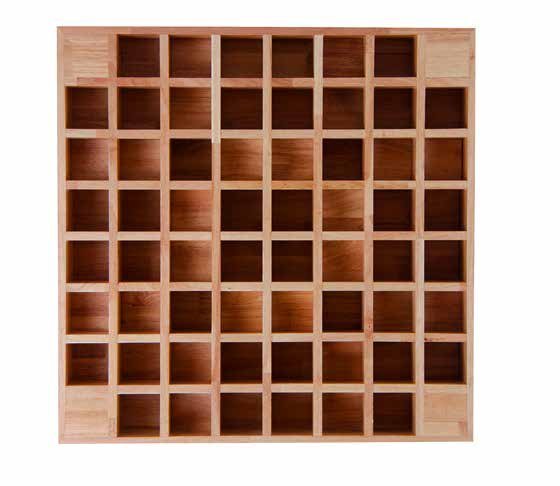
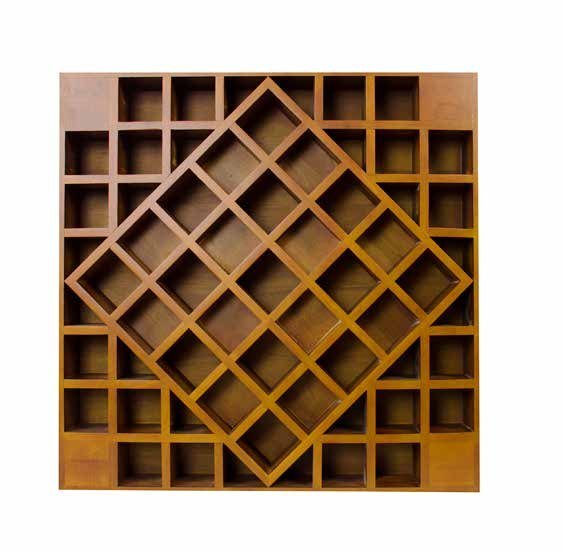
Not all diffusers are equal, and a data-sheet label rarely tells you enough. A quadratic residue diffuser is built from wells whose depths follow a quadratic-residue series based on a prime number. The depth sequence sets which frequencies scatter, well width sets the upper limit, and maximum well depth sets the lowest effective frequency. A shallow decorative profile scatters only the top octaves; a deeper QRD reaches further down. The sequence repeats across the panel, and adjacent panels are often rotated or mirrored to avoid a periodic “grating” effect.
When you review a QRD diffuser design, ask for three things: the prime and sequence used, the maximum well depth, and measured scattering coefficients by frequency band. Depth and frequency are linked — as an indicative relationship, a deeper well reaches a lower design frequency, but the exact figure depends on geometry and cannot be read off a catalogue photograph. Also confirm the depth the unit projects from the wall, since that consumes room space and affects setting-out. MST Acoustics supplies QRD and MLS formats including the N1/N2 acoustic diffuser and D1/D2 diffuse reflection panel; the acoustic diffuser category lists the geometries.
Absorber vs diffuser: an indicative comparison
Use this table to frame the conversation, not to finalise a schedule. Every figure is indicative; the coefficient that matters must come from a test report on the exact product, and coverage from a room model or measured survey.
| Attribute | Porous absorber (felt / wool / fabric panel) | QRD / MLS diffuser |
|---|---|---|
| Primary effect | Removes sound energy as heat | Scatters and delays reflected energy |
| What it fixes | High RT60, loud reverberant field, poor speech clarity | Slap echo, hard reflection, lack of spaciousness |
| How it is rated | Absorption coefficient / NRC (ISO 354, ASTM C423) | Scattering or diffusion coefficient by band |
| Depth in room | 9–50 mm typical panel, more with a cavity | Shallow to deep wells; depth sets low-frequency reach |
| Distance needed | Works close to the surface | Needs listener distance to develop scattering |
| Overuse risk | Dead, airless, “padded cell” feel | Ringy, smeared, under-controlled room |
| Typical first placement | Ceiling, first-reflection points, large bare walls | Rear wall, upper side walls, performance spaces |
The two are complementary. A wall can even combine them: a slatted or perforated facing over felt absorbs through the openings while the surface rhythm scatters the rest. That hybrid behaviour is why timber-faced systems are common in premium interiors, but the result still depends on the backing and open area — see the perforated wood acoustic panel range.
Placement maps: where each treatment belongs
Start with the surfaces that create the strongest reflections, then work outwards. This sequence is a starting point for a wall-and-ceiling plan, adjusted to geometry and target.
- Ceiling first: a broad field of absorptive panels or clouds above the occupied zone reduces reverberation without taking wall space. In offices and classrooms this is usually the highest-value area.
- First-reflection points: side walls and ceiling patches between source and listener. Absorb here to remove reflections that blur speech; use diffusion only where the listener is far enough away.
- Rear wall: the classic slap-echo surface. Close to the seats treat it with absorption; with sufficient distance and a need to keep the room open, use a QRD or MLS diffuser.
- Upper side walls: in performance and large meeting spaces, diffusion on upper walls preserves spaciousness while lower walls handle absorption and impact resistance.
- Behind the listener in control rooms: usually absorption or a hybrid, since the listener is close and a clear monitoring image matters more than diffusion.
Map these zones on the same drawing as services, lighting and fire strategy. A diffuser moved 300 mm to clear a duct can land in a first-reflection point, and an absorber on a rear wall can flatten a room that needed life. The room treatment solutions overview shows how wall and ceiling zones are coordinated.
Absorber diffuser balance: indicative coverage ratios
There is no universal percentage, but absorber diffuser balance comes up in every specification meeting. The table gives indicative starting ranges by room type for early design. They are not guarantees and must be replaced by a room model before issue for construction.
| Room type | Indicative absorption focus | Indicative diffusion role | Comment |
|---|---|---|---|
| Small meeting room / classroom | Dominant — ceiling plus wall panels | Minimal; only if rear wall is distant | Prioritise clarity and RT60 control |
| Open-plan office | Dominant — clouds, baffles, screens | Limited, on distant upper walls | Speech privacy and HVAC noise dominate |
| Restaurant / atrium | Substantial, distributed | Moderate, to keep the room lively | Avoid the over-dead “padded” feeling |
| Auditorium / performance hall | Targeted, mainly seating areas | Significant on rear and upper side walls | Spaciousness matters alongside clarity |
| Control / critical listening room | High, including bass control | Selective and distance-dependent | Monitoring accuracy drives the balance |
Coverage is only half the decision: placement, frequency range and mounting all change the result. A smaller area correctly placed at first reflection usually beats a larger area distributed at random. When comparing schemes, ask for the modelled result per zone rather than a single total square-metre figure.
Application scenarios: how the balance changes by project
- Corporate boardroom: ceiling and first-reflection absorption keeps video calls intelligible; if the rear wall is far, a modest diffuser prevents echo without deadening the room.
- Restaurants: distributed absorption lowers the noise floor while diffusion on upper walls preserves a sense of buzz. Cleanable finishes and fire class drive the choice.
- Education: ceiling-first absorption meets speech-intelligibility targets; diffusion is secondary, used only in larger halls with sufficient listener distance.
- Performance spaces: a deliberate mix — absorption to control RT60, QRD or MLS on rear and upper walls for ensemble and spaciousness. Coordinate fire and mounting early.
- Hard-surfaced lobby refurbishment: start with ceiling and one-wall absorption; add diffusion only after the slap is reduced and distance is sufficient.
RFQ checklist for an absorption and diffusion package
A precise enquiry gets comparable quotations. Include the following and require a written response to each item before you shortlist a supplier.
- Room volume, dimensions, ceiling height and target RT60 or intelligibility criterion.
- A marked-up plan showing absorber and diffuser zones with listener and source positions.
- For absorbers: construction, thickness, density, mounting and per-frequency coefficients with test standard.
- For diffusers: type (QRD or MLS), prime and well-depth sequence, maximum depth, scattering coefficients by band.
- Indicative coverage per zone, with the reasoning — clarity, slap control or spaciousness — stated.
- Reaction-to-fire classification for the complete assembly as installed, and any substrate or cavity requirements.
- Setting-out drawings, fixing method, substrate responsibility, assembly weight, tolerances and spare-panel policy.
Send the package through the contact page and keep the technical catalogue as the reference for standard sizes. Ask for the balance rationale in writing, not agreed verbally after the order. Our earlier notes on absorption and diffusion wall design explain the concept for a client presentation.
Common mistakes in sound absorption vs diffusion diffusers layouts
- Treating every wall the same: rear wall, first-reflection points and ceiling do different jobs and rarely need the same product.
- A diffuser too close to the listener: within a metre or two it cannot develop scattering and reads as a textured surface.
- Absorbing a room to death: wall-to-wall absorbers meet the RT60 number but remove the sense of space; keep some scattering area.
- Expecting diffusion to fix low-frequency boom: modal problems need absorption with depth, not a shallow well pattern.
- Comparing an absorption number with a diffusion number: they are different quantities; a sheet quoting only NRC says nothing about scattering.
- Ignoring depth and setting-out: diffuser wells consume room depth and can conflict with ducts or sprinklers if left late.
- Forgetting fire and substrate: the classification must cover the complete assembly, including backing and fixing.
Measurement verification: confirming the balance worked
Specification is not complete at handover. Measure the room before treatment if you can, then again after installation. Reverberation time by frequency band shows whether absorption did its job; a clap test can reveal a remaining rear-wall slap, but an impulse-response measurement gives defensible data. Check speech intelligibility where communication matters and listen from several positions — a layout that measures well only at one desk has not solved the room. If the space feels dead, reallocate absorption rather than adding diffusers on top of a failed scheme; if it still rings, find the untreated reflection path before buying more product. Keep measured results with the submittal package as evidence the balance matched the brief.
Specify the balance, not just the products
The reliable sequence is simple: define the symptom, decide surface by surface whether to remove or scatter energy, check the listener distance supports diffusion, then write coverage and test data into the schedule. MST Acoustics supplies absorptive felt, slat and fabric panels alongside QRD and MLS diffusers, and our team can review a wall-and-ceiling plan before manufacture. Request a quote with your plan and target, or download the catalogue to shortlist diffuser geometries and absorber finishes. All values here are indicative; final performance, dimensions, coverage and terms must be confirmed in the formal quotation.
Frequently asked questions
What is the difference between sound absorption and diffusion?
Absorption removes sound energy: a porous panel converts part of the wave into heat, lowering reverberation and improving clarity. Diffusion keeps the energy but scatters and delays the reflection, breaking up slap echo and preserving spaciousness. In a sound absorption vs diffusion diffusers decision, you choose between removing a reflection and redistributing it.
When to use acoustic diffusers rather than absorbers?
Use diffusers when the listener is far enough from the surface for scattering to develop and the room should stay lively — rear and upper walls of auditoria, larger meeting rooms and restaurants. In small rooms or at near first-reflection points, absorption is usually the safer treatment.
How do I read a QRD diffuser design?
Look for the prime-number sequence, maximum well depth and measured scattering coefficients by band. Deeper wells generally reach lower frequencies; well width limits the top frequency. Treat depth-to-frequency rules as indicative and require product-specific data before writing the panel into a schedule.
What is a sensible absorber diffuser balance for a meeting room?
As indicative guidance, a small meeting room is usually absorption-led: ceiling panels plus treatment at first reflections and, if close, the rear wall. Diffusion is added only where the rear wall is distant and the client wants the room to feel less dead. Confirm the split with a room model or measurement rather than a fixed percentage.
Can a diffuser replace acoustic panels for echo control?
Not directly. A diffuser breaks up a distinct slap reflection but does not remove much energy, so it will not lower an excessive reverberation time. If the room rings, you need absorption. Many projects use both: absorbers to set the reverberation time and a diffuser to deal with a specific hard reflection.
What documents should I request for a diffusion package?
Ask for the diffuser type and well-depth sequence, scattering coefficients by frequency with the test standard, how far the unit projects from the wall, a setting-out drawing, fire classification of the complete assembly, and fixing details. Require the balance rationale and coverage in the written quotation.