Sustainability claims in building materials are cheap; data is not. This update shares the numbers behind MST Acoustics’ material story — how much recycled PET moves through our production, what happens to offcuts, how wood sourcing is certified, and what remains honestly unfinished on the circularity roadmap. Our partners increasingly need these facts for ESG reporting and tender documentation, and they deserve them in plain figures rather than adjectives.
From bottles to felt: the volumes
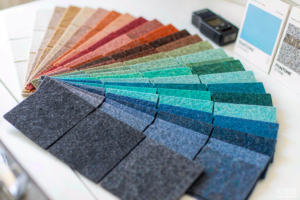
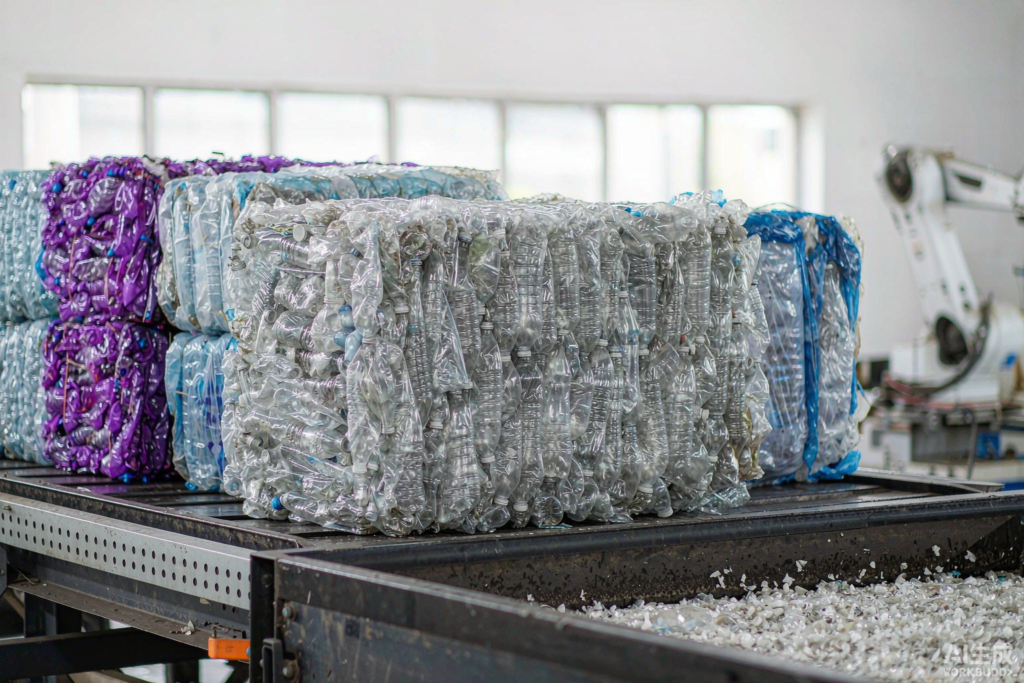
MST’s PET panel production runs on recycled polyester fiber made from post-consumer bottles. Across the past year, our felt lines consumed hundreds of tons of recycled PET fiber — the equivalent of tens of millions of standard 500ml bottles converted into acoustic panels now installed in offices, schools and public buildings on five continents. Every panel body in our PET families is produced from this recycled stream, with recycled-content declarations available per product family for LEED, BREEAM and client ESG worksheets.
The chain is verifiable, not anecdotal: certified recycled fiber suppliers, documented input volumes, and the production records that connect a shipped panel to its material batch. When a consultant asks “what percentage is recycled, and can you prove it”, the answer arrives as documents, not as a brochure.
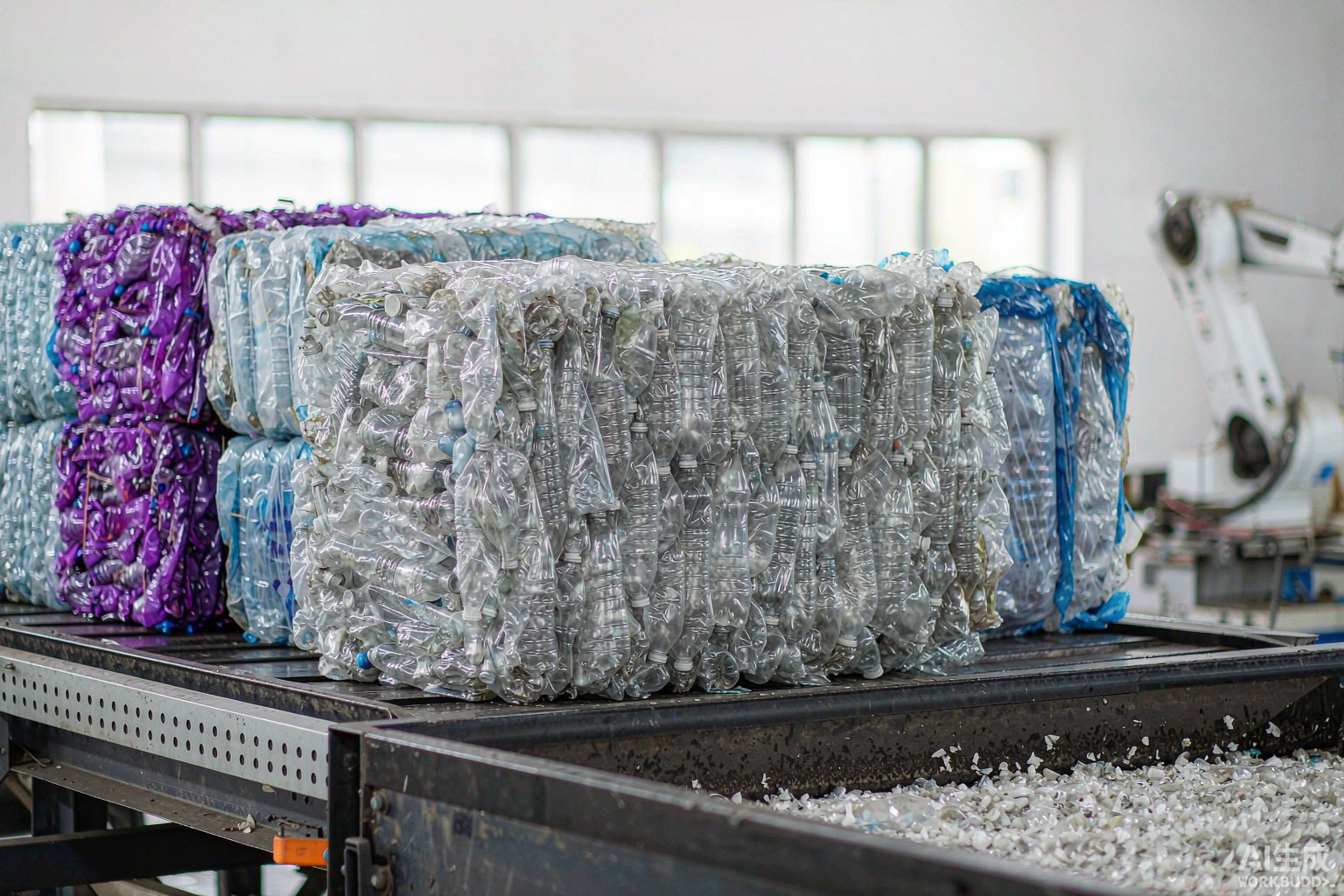
Offcuts: the circularity test most factories skip
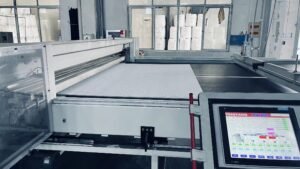
Production waste tells the truth about a factory’s circularity. MST’s felt offcuts — from panel trimming and CNC cutting — are collected, granulated and returned to the fiber stream rather than landfilled; wood offcuts from the slat lines are either reused in smaller-format products or recycled through certified wood-waste channels. Packaging follows the same discipline: corrugated and film materials are sorted at source, and the upgrade of our export packing system this year deliberately favored recyclable mono-materials over composite laminates.
Wood: certified at the source
Our wood slat lines run on FSC Chain-of-Custody certified board and veneer, with the certificate scope covering production and export packing. FSC claims appear on order documentation so the chain of custody survives into our partners’ hands — the detail that lets a distributor’s project claim responsibly sourced timber with paper behind it. Combined with E1/E0 formaldehyde class boards and water-based finishing where specified, the wood story is as documented as the PET one.

What remains unfinished — and what is next
An honest update includes the gaps. Full take-back of installed panels at end of life depends on regional recycling infrastructure that most markets are still building; our role today is designing for that future — single-material constructions, mechanical fixings, and disassembly documentation — so panels can re-enter the stream when the logistics mature. Our next steps: expanded environmental product documentation per family, deeper partnerships with regional PET recyclers for decommissioned panels, and continued migration of packaging toward fully mono-material systems.
For our partners, the practical takeaway is simple: the sustainability story you sell with MST panels is materially true, testably documented, and improving on a published roadmap. That is what “green” should mean in this industry — and what it increasingly must mean to win the projects that matter.
The Numbers Behind the Fibre
Recycled content claims deserve scrutiny, so the update leads with verification. The PET felt range’s post-consumer recycled percentage is certified by an independent auditor, with chain-of-custody documentation covering collection through fibre production to panel pressing. The bottle counts are calculated, not estimated: kilograms of recycled PET input per product line, converted at standard bottle weights, reconciled against purchase records. Formaldehyde and VOC emissions are tested to the standards European and North American specifications reference, with reports available in the project documentation package the spec desk assembles. This is deliberately unglamorous transparency: sustainability credentials that survive a procurement audit are worth more than bolder ones that do not.
The energy transition advanced alongside the material story. Rooftop solar now covers a meaningful share of production electricity, with capacity expanding in phases through 2027; the compressed fibre production process – the most energy-intensive step – is scheduled first in the solar window. Water in the production loop is recycled through closed circuits, and production waste felt is re-granulated back into feedstock rather than landfilled, closing the loop inside the factory before any external recycling conversation begins.
What This Means for Your Green Building Projects
For consultants assembling LEED, BREEAM, or WELL submissions, the practical value sits in documentation readiness. The recycled content certificates, emission reports, and environmental declarations are maintained current and attached to every specification package on request, which converts a sustainability conversation from a weeks-long document chase into a file transfer. Distributors serving certified projects should register their interest with the spec desk so the relevant document set ships with the first quotation rather than arriving after the submission deadline – the single most common timing failure in green building procurement. And for end clients, the story is summarised in one sentence the sales teams can use verbatim: every square metre of panel carries verified recycled content, tested emissions, and a manufacturing footprint that is published rather than promised. Projects increasingly buy that sentence with a purchase order attached.
Key Takeaways
- Recycled content is audited with chain-of-custody, not estimated.
- Emission and formaldehyde reports ship in the project documentation package on request.
- Solar covers a growing share of production electricity; waste felt is re-granulated in-house.
- Register with the spec desk so green-building documents arrive with the first quotation.
The forward plan rounds out the picture. Capacity for certified recycled fibre is contracted through the next two years, which matters because recycled PET supply can tighten with commodities markets and projects should not inherit that volatility. Packaging is transitioning to recycled and recyclable materials across the range, with the phase-out of problematic plastics scheduled alongside the production calendar so no order window is disrupted. And the data practice will deepen: annual third-party verification continues, with the scope widening to include packaging and logistics in the published footprint. Distributors can pass all of it through their own sustainability reporting verbatim – the documents are built to survive a customer’s audit, because that is precisely the use they get. The destination is simple to state and slow to fake: claims that arrive with evidence attached.