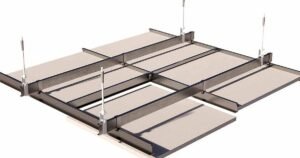
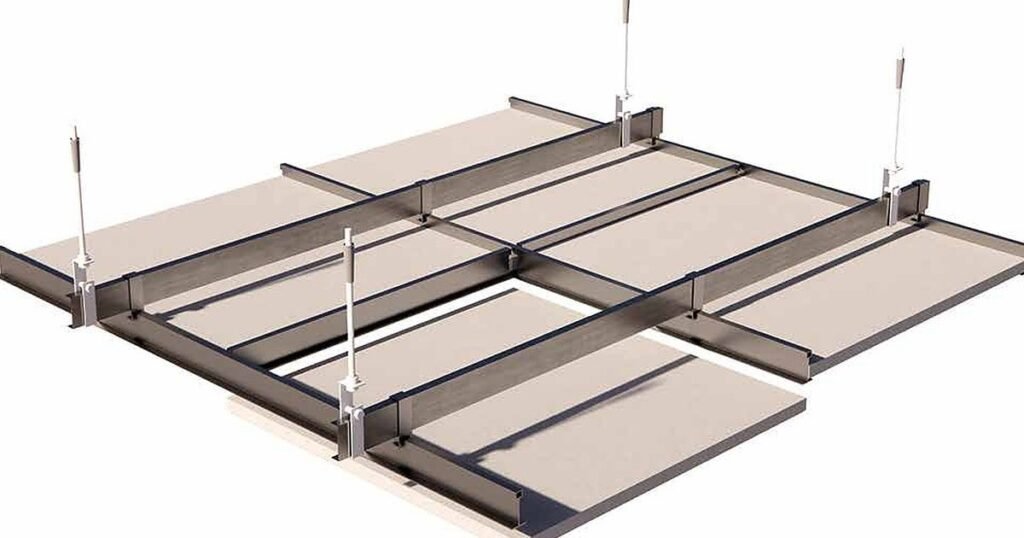
A ceiling looks perfect on the drawing, scores well in the acoustic model and arrives on schedule. One wet season later, the field is waving, the edges have darkened and the client wants to know who signed off the specification. The problem is rarely the absorption coefficient. It is that nobody defined what “humid” meant for that building, or how the panel, its facing and its suspension would behave together. Searches for moisture resistant acoustic panels humid climates usually start at exactly this point, after a product was chosen on a material name rather than on a service environment. This guide is written for architects, acoustic consultants, main contractors, distributors and procurement managers who need a defensible specification for tropical, coastal, pool-adjacent or otherwise moisture-loaded interiors. It covers failure mechanisms, a material comparison, the role of facings and fixings, HVAC coordination, and the documents to request before an order is placed.
Start with the environment, not the product
“Moisture resistant” is a claim without a boundary unless the environment is described first. Two rooms with the same average humidity can behave very differently: one stays at 55% RH all year with stable air movement, while the other cycles between 45% and 85% RH, is shut down every weekend, and has a chilled ceiling surface close to the dew point. The second room is the one that fails. Define four inputs before shortlisting any system: the normal operating RH band, the peak RH and how long it lasts, whether surfaces can ever fall below dew point, and how the room is cleaned. Add chlorides for coastal sites and chlorine compounds for pool halls. These are planning categories, not warranty thresholds: the indicative bands below must be confirmed against the actual project conditions and the supplier’s formal quotation.
- Normal conditioned interiors: roughly 40-60% RH, stable air movement, occasional damp cleaning.
- Elevated humidity: roughly 60-75% RH for long periods, including tropical interiors without full-time dehumidification.
- High humidity with cycles: roughly 75-85% RH, or repeated crossing of the dew point at cold surfaces.
- Wet or condensation-prone zones: intermittent saturation, splash, chlorine or salt exposure, or prolonged shutdown with no climate control.
Write those conditions into the specification as design parameters. A supplier cannot be held to a performance expectation that was never stated, and a buyer cannot compare two quotations that assume different environments.
How acoustic panels actually fail in humid interiors
Moisture damage is a system failure, not a single-material failure. Understanding the sequence helps you ask the right question at each design gate. A porous core may be dimensionally stable while the facing softens; the facing may be sound while the suspension rail corrodes; the ceiling may look flat while the adhesive line has lost bond behind it.
- Core swelling and thickness change: water enters an open-cell or paper-faced core, the panel loses geometry, joints open and the absorption curve shifts.
- Facing delamination: the decorative layer lifts at edges because the adhesive was not rated for sustained humidity or for the cleaning chemicals used on site.
- Sag from the support system: hangers, rails or clips corrode or creep. The panel itself may be perfectly moisture stable and still visibly droop.
- Staining and biological growth: condensation on the back face or trapped moisture behind an impervious facing creates a dark patch that no amount of surface wiping will remove.
- Acoustic drift: coatings, dirt and moisture in the pore structure reduce high-frequency absorption. A figure measured on a bare laboratory sample is no longer the installed figure.
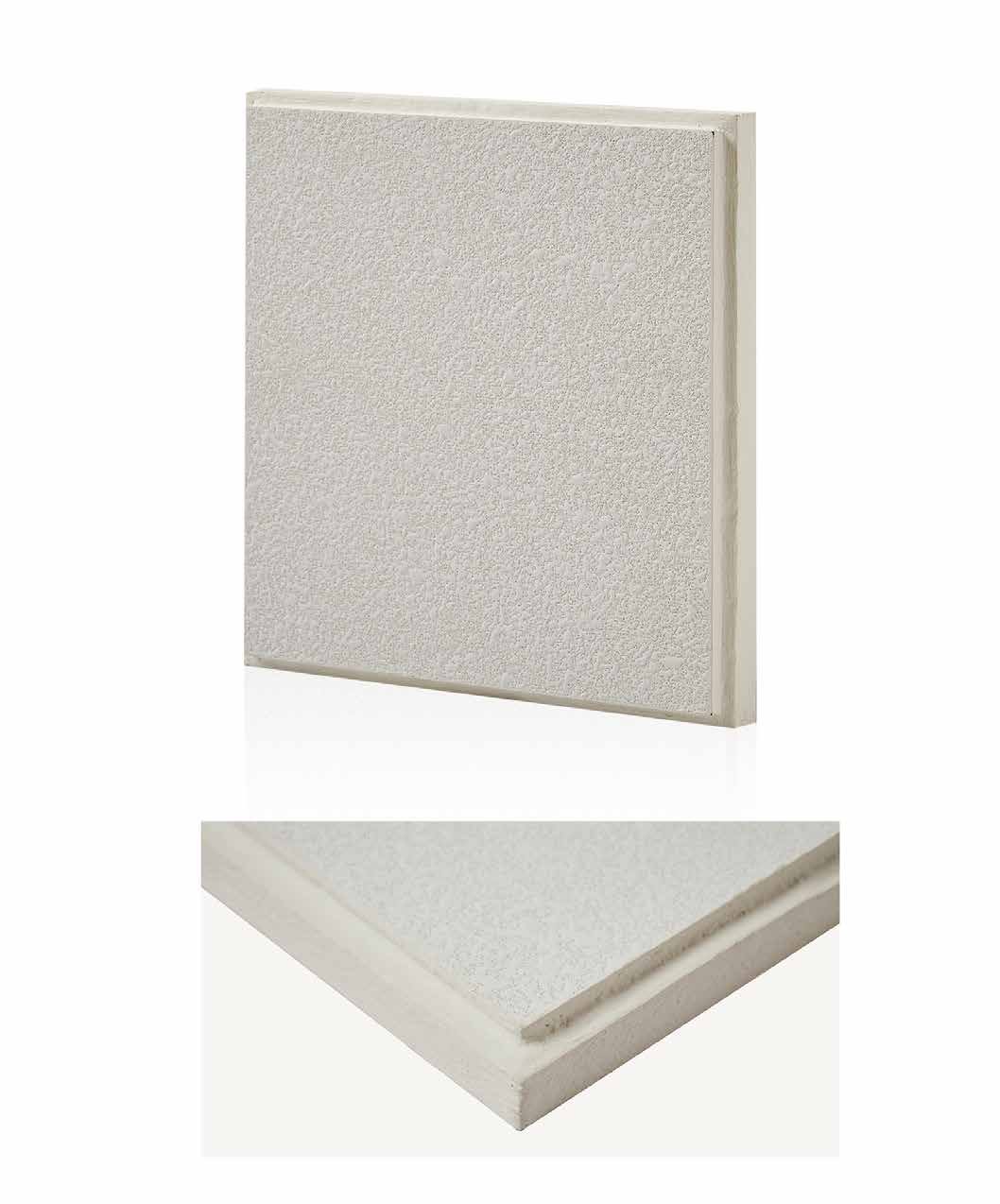
Moisture resistant acoustic panels humid climates: material behaviour compared
No material is universally “moisture proof”. The table below describes typical behaviour in interior service and is indicative only; exact limits depend on density, binder, facing, thickness, edge seal and fixing detail. Treat it as a shortlisting aid, then ask each supplier for data on the exact construction being offered.
| Core / system | Humidity behaviour | Where it fits | Details to control |
|---|---|---|---|
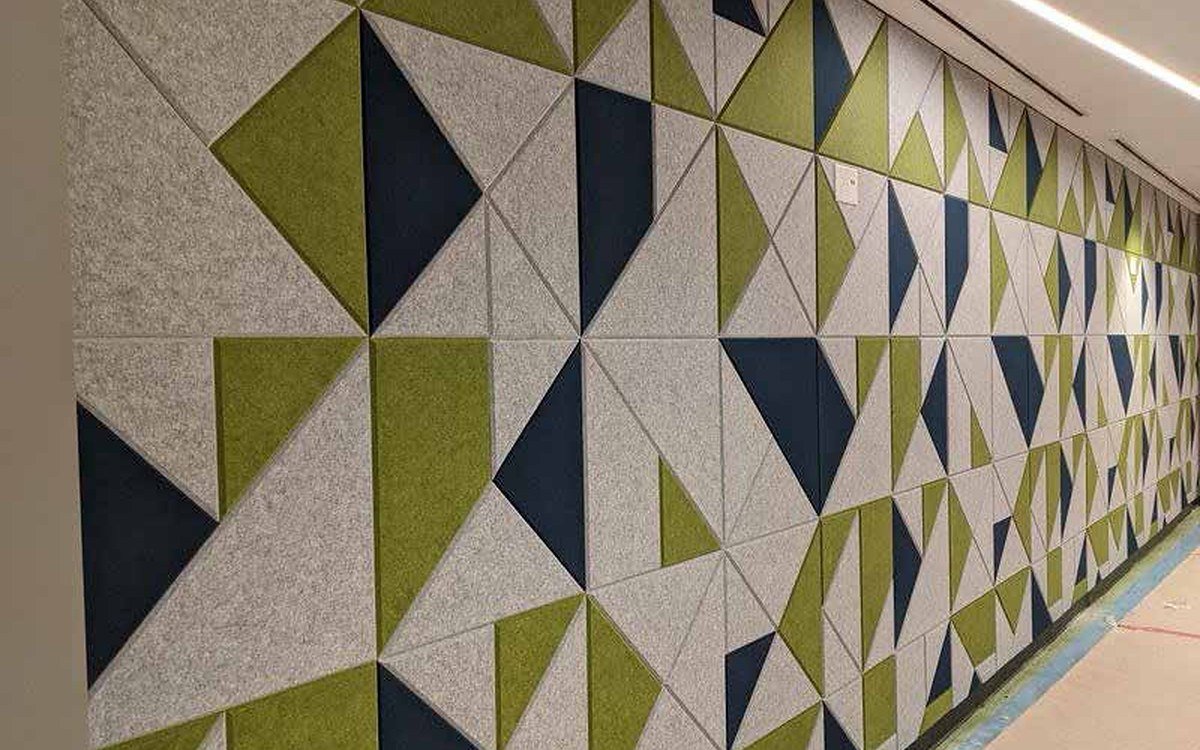
| PET felt panels | The polyester fibre itself is hydrophobic: it does not swell like a cellulosic core and retains shape through humidity cycles. Indicative first choice for elevated-humidity interiors. | Walls, ceiling clouds and baffles in tropical offices, hospitality and education. | Binder and facing chemistry, colour stability near glazing, dust loading, and corrosion of the fixings behind it. |
| Glass-fibre tiles and clouds | Glass fibre is non-hygroscopic, but binders, scrims and facings can be the weak link. Edge sealing and a humidity-rated facing are decisive. | Lay-in ceilings and clouds in conditioned to elevated-humidity interiors. | Facing permeability, sealed cut edges, grid corrosion and handling during installation. |
| Cement-bonded wood wool and mineral-fibre boards | Cement or mineral binders tolerate humidity well; the panels are heavy and dimensionally stable. Weight moves the risk to the suspension system. | Plant rooms, circulation zones and robust public interiors. | Hanger capacity, corrosion protection, and sealing of exposed edges. |
| Aluminium panels and louvres | Metal is non-organic and does not support mould; perforated aluminium cleans easily. Cold surfaces can still attract condensation, and coastal atmospheres attack unprotected alloys. | Pool halls, kitchens, transport concourses and wet-area ceilings. | Alloy and coating specification, perforation open area, backing material, and non-corroding suspension. |
| Fabric-wrapped panels | Comfortable and acoustically effective, but fabric and core both respond to moisture. Only suitable where the fabric is rated for the cleaning regime and the cavity can dry. | Dry to moderately humid auditoria and meeting rooms. | Fabric weight and treatment, adhesive type, backing openness and moisture behind the panel. |
For a project with mixed zones, a zoned specification is usually more economical than one material everywhere: an aluminium system at the pool edge, PET felt in the adjacent circulation area, and a cement-bonded board in the plant room. See the mineral fibre ceiling range and the application solutions overview for how these families are normally deployed.
The stack matters more than the core: facings, scrims and coatings
Buyers often approve a core and discover too late that the delivered panel has a film facing, a printed layer or a heavy coating. Every added layer changes moisture behaviour and acoustic performance. Ask for the full build-up: core, adhesive, facing, scrim, edge treatment and any site-applied finish. A film-faced panel may wipe clean but trap moisture in the cavity; an open woven facing may dry well but catch dust; a coating can bridge perforations and cut high-frequency absorption.
Require octave-band absorption data for the finished construction, not for the bare core, and confirm that the test mounting resembles the project detail. If a supplier quotes a single NRC value only, the number cannot tell you how the panel behaves at 125-250 Hz or after a coating is applied. Our earlier guide to verifying acoustic test data and downloading technical catalogues sets out the documents worth requesting at this stage. For wet zones, also ask whether the facing tolerates the actual disinfectants used by the facilities team, not a generic “washable” description.
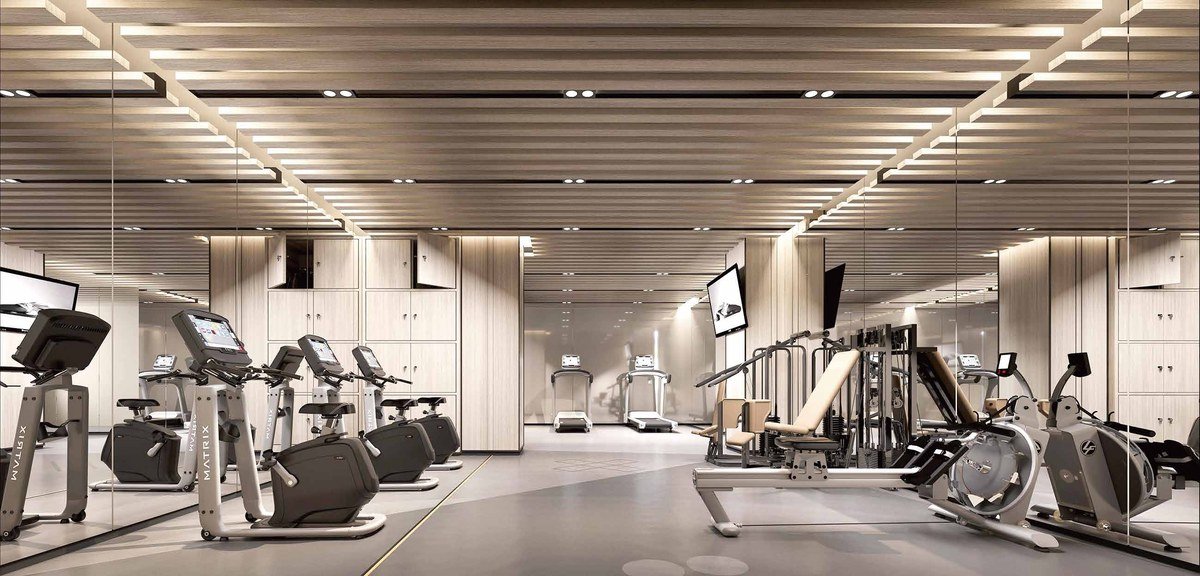
Suspension, battens and fasteners: the hidden sag risk
The most common cause of a sagging ceiling in a humid building is not the panel. It is the grid, rail or batten behind it. Specify the support system in the same document as the panel: hot-dip galvanised or aluminium sections for general humid interiors, and stainless or otherwise corrosion-rated fixings where chlorides are present. Confirm hanger spacing against panel weight, especially with dense mineral-fibre or cement-bonded boards, and allow for movement at long runs and at changes of substrate.
Where panels are adhesive-fixed, ask for the adhesive’s humidity and temperature rating and a written substrate preparation method. Do not accept a fixing detail that relies on the panel carrying its own weight across a long span. The micro-perforated aluminium ceiling panel and the metal aluminium range illustrate how a corrosion-conscious system is normally detailed for demanding interiors.
Coordinating with HVAC and building services
Humidity problems are frequently created upstairs, in the plant room. A panel surface that sits below the room’s dew point will condense water even when the average RH looks acceptable. Coordinate the ceiling layout with the mechanical engineer before setting out: avoid supplying cold air directly across a panel face, identify chilled surfaces near the ceiling, and confirm that dehumidification is sized for the wet season and for unoccupied periods. Pool halls and spas need a continuous humidity-control strategy; a weekend shutdown can do more damage than a year of normal operation.
Agree the control setpoints and the response when RH rises above them. Ask for access panels or demountable sections where services above the ceiling need inspection, because a wet service leak behind a fully sealed ceiling is an expensive discovery. Record the commissioning RH and temperature readings: they are useful evidence if a dispute about the specification arises later. These are coordination recommendations, not performance warranties; final settings belong to the building-services designer.
Where the specification changes by application
- Tropical offices and hospitality: control RH during both occupied and shutdown hours, use PET felt or sealed glass-fibre systems, and avoid water-based adhesives on paper-faced boards.
- Pool halls and spas: prioritise non-organic cores and corrosion-rated suspension; require chlorine-resistant facing data and check condensation at every cold surface.
- Commercial kitchens and hygiene zones: choose cleanable surfaces with a documented chemical-resistance list, and seal panel edges against grease and steam penetration.
- Plant rooms and back-of-house: allow for higher mass, robust boards and accessible fixings rather than a decorative finish that cannot survive maintenance work.
When the environment is demanding, it is often cheaper to change the system than to upgrade every layer of a marginal one. The PET acoustic ceiling cloud and the PET felt panel category show the construction options available where dimensional stability matters more than a fully sealed surface.
RFQ and submittal checklist for humid projects
A short, precise RFQ gets comparable answers. Include the following items in the enquiry package, and ask for each response in writing rather than in a sales call.
- Normal and peak RH, temperature range, and duration of peaks; whether surfaces can cross dew point.
- Chemical exposure: cleaning agents, disinfectants, chlorine or salt, and the cleaning frequency.
- The exact construction offered: core density and thickness, facing, adhesive, scrim, edge seal and coating.
- Full octave-band absorption data for the finished panel in the proposed mounting, with test method stated.
- Reaction-to-fire classification for the complete assembly as installed, including the facing.
- Suspension and fixing specification: material, coating, hanger spacing, corrosion rating and movement joints.
- Sample conditioning method: will samples be acclimatised to project RH before measurement?
- Packaging, site storage and handling instructions, plus an inspection point before shipment.
- Written exclusions: which humidity or chemical conditions are outside the supplier’s stated scope.
Send the package to the technical desk through the contact page, and keep the downloadable catalogue beside it as a reference for standard constructions and sizes.
Common mistakes when specifying moisture resistant acoustic panels humid climates
The same errors recur on project after project. Avoiding them costs nothing at design stage and a great deal during rectification.
- Specifying by material name only. “PET panel” or “mineral fibre tile” says nothing about facing, adhesive or hangers.
- Accepting bare-core acoustic data. The finish and the mounting can change the curve you actually buy.
- Ignoring shutdown conditions. Weekend and holiday RH often exceeds the occupied design case.
- Choosing a washable facing without the chemical list. “Wipe clean” is not a specification.
- Leaving fixings to the installer. A moisture-stable panel on a corroding rail still sags.
- Skipping a mock-up. One full-scale bay conditioned to project RH reveals more than a dozen data sheets.
Turn the environment into a written specification
Start with the RH profile and the cleaning regime, then select a core/facing/suspension combination that survives both. Ask for finished-construction acoustic data, a corrosion-rated fixing schedule and a written scope of exclusions, and verify them against a mock-up before the full order is released. MST Acoustics supplies PET felt, mineral-fibre, wood-wool and aluminium acoustic systems for demanding interiors, and our technical team can comment on the construction options against your stated environment. Request a quote with your humidity and cleaning conditions included, or download the catalogue to shortlist standard panels and finishes. Indicative values in this guide are planning guidance only; final specifications, performance figures and commercial terms must be confirmed in the formal quotation for your project.
Frequently asked questions
What are moisture resistant acoustic panels humid climates projects should specify?
Specify the complete construction, not just the core: a dimensionally stable core, a facing and adhesive rated for the expected RH and cleaning chemicals, sealed edges, and corrosion-rated suspension. Define normal and peak RH, dew-point risk and shutdown conditions in the enquiry so quotations are comparable. Values quoted as indicative in this article are planning guidance and must be confirmed in a formal quotation.
Does PET felt really resist humidity?
PET fibre is hydrophobic and does not swell like a cellulosic core, so it keeps its shape well through humidity cycles. Check the binder, any printed or film facing, and the fixings behind the panel: those components determine whether the finished system performs as well as the fibre itself. Ask for absorption data on the finished construction.
Can mineral fibre ceiling tiles be used in a pool hall?
They can be used in some pool-adjacent areas when the tile, facing and grid are all rated for the environment and condensation is controlled. In wet zones with chlorine and frequent saturation, many specifiers move to aluminium or other non-organic systems. The decision depends on the exact project conditions and should be confirmed with the supplier.
Why did our panels sag even though the core was moisture resistant?
Sag usually starts in the support system or the adhesive line, not the core. Corroded hangers, an under-specified grid, water-based adhesive in a wet area, or movement at long runs can all deform a perfectly stable panel. Specify the suspension and fixing grade in the same document as the panel.
Will a coating or film facing reduce sound absorption?
It can. A continuous film or heavy coating closes pores and reduces high-frequency absorption, and may also trap moisture behind the facing. Request octave-band data for the finished panel in the proposed mounting, rather than relying on a figure measured on the bare core.
What documents should I request before ordering for a humid project?
Ask for the full build-up, finished-construction absorption data with test method, reaction-to-fire classification for the assembly, the fixing and corrosion schedule, chemical-resistance information for the facing, sample conditioning details, packaging and storage instructions, and written exclusions. A full-scale conditioned mock-up is the final check.