Every serious acoustic brief contains three letters and a decimal: RT60 ≤ 0.6 s. For buyers who are not acoustic consultants, that line is either intimidating or ignorable — and both reactions cost money. RT60 is actually the most useful number in the industry: it is the bridge between “this room echoes” and “we need forty square meters of 12mm panels”. Here is what it means and how to use it in real sales conversations.
What RT60 actually measures
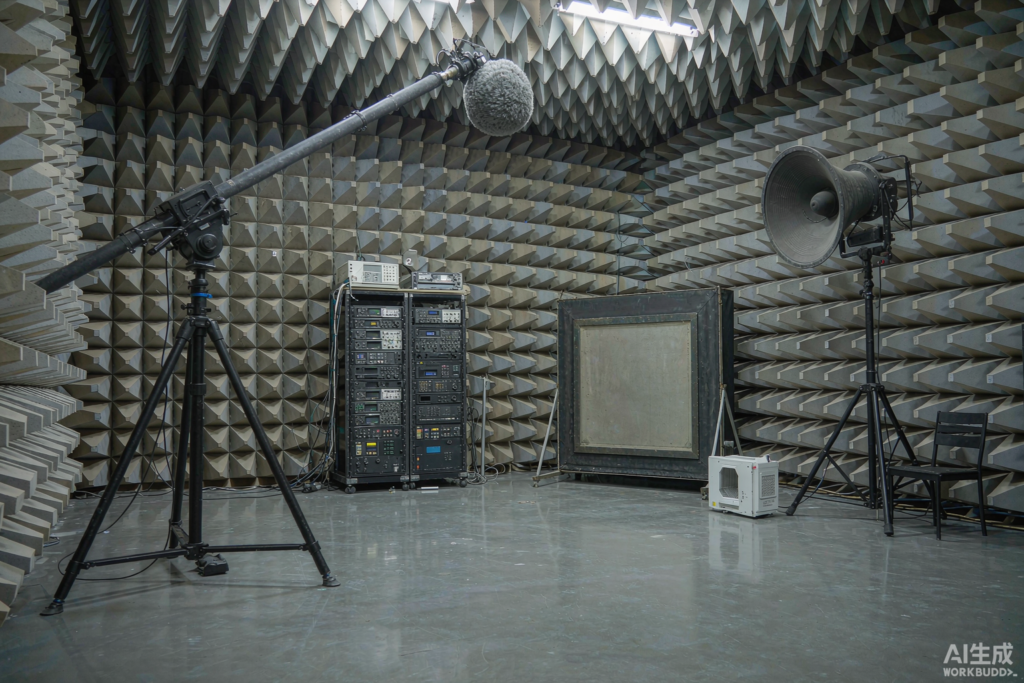
Reverberation time is how long sound lingers in a room after the source stops. Formally: the time for sound energy to decay by 60 decibels — hence RT60. Clap in a stairwell and the sound rings for seconds (RT60 of 3–5 s); clap in a furnished living room and it dies almost instantly (0.3–0.5 s). The measurement itself is standardized (ISO 3382-2): excite the room, record the decay, read the time. In practice, briefs quote the target per frequency band or as a mid-band average, because rooms decay differently at low and high frequencies.
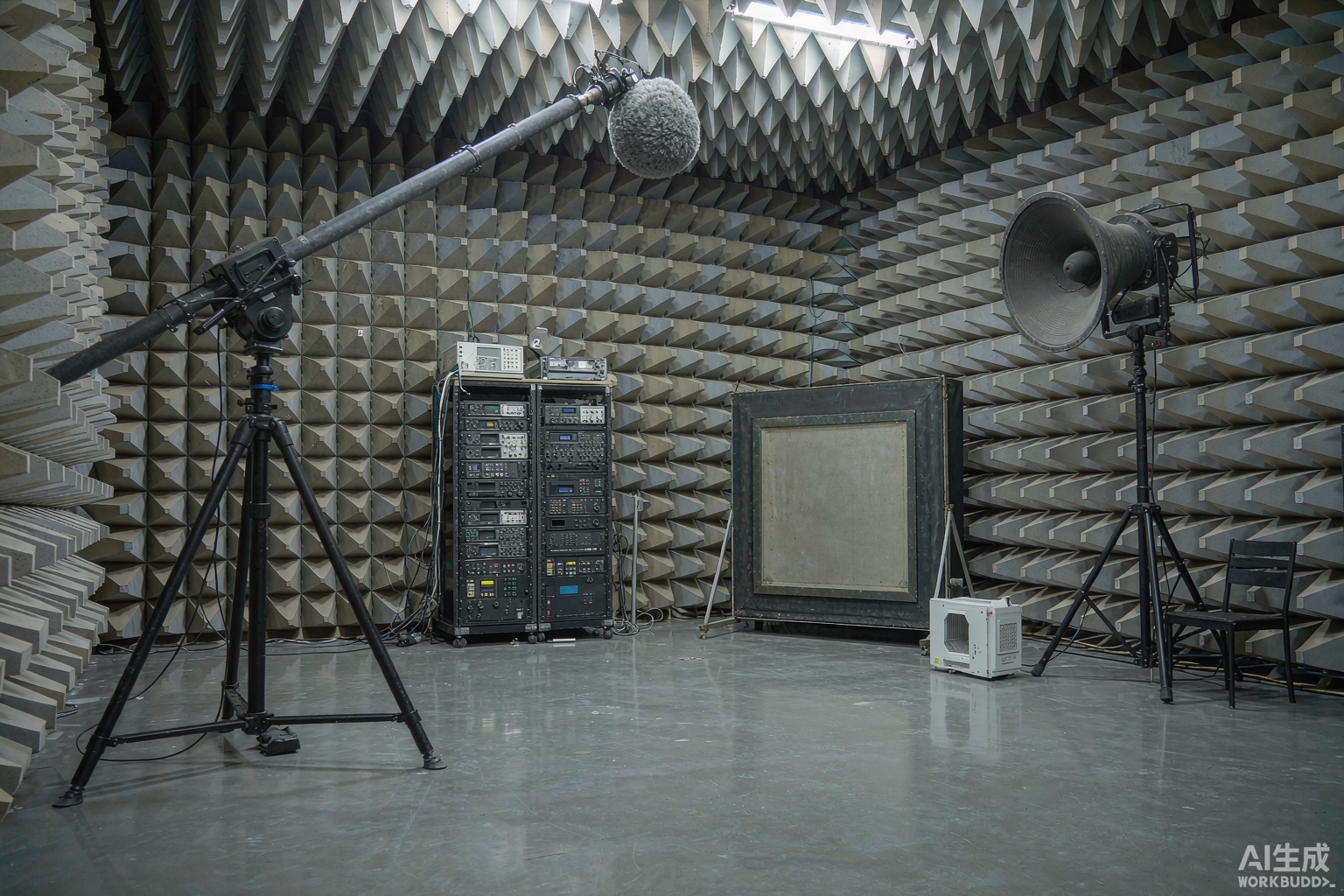
Target values by room type
Decades of practice and research have converged on comfortable ranges:
- Classrooms: 0.4–0.6 s — speech intelligibility is the goal.
- Offices, open plan: 0.5–0.8 s — calm without deadness.
- Meeting and video rooms: 0.3–0.5 s — clarity for microphones and ears.
- Restaurants: 0.7–1.0 s — lively but intimate; below 0.6 s dining rooms feel oddly sterile.
- Concert halls: 1.8–2.2 s — deliberately long, for musical richness.
The lesson embedded in those numbers: there is no universal “good” RT60. A recording studio and a cathedral are both correct. The target always serves the room’s purpose — which is why the brief’s number matters more than any instinct about “more absorption is better”.
How panels move the number
The Sabine equation — the oldest tool in acoustics — connects RT60 to absorption simply: RT60 ≈ 0.161 × V / A, where V is room volume and A is total absorption (each surface’s area × its absorption coefficient). The practical consequences:
- Small rooms respond fast. A 200 m³ classroom needs roughly 120 m²·sabins of absorption to reach 0.6 s from a bare 1.2 s — typically 30–50 m² of effective absorption, which a mix of 12mm wall panels and ceiling clouds delivers comfortably.
- Big volumes are humbling. Atriums and halls scale absorption needs with volume; this is why transport hubs lean on thousands of square meters of ceiling treatment.
- Every surface counts — including the ones you remove. Replacing a reflective drywall section with NRC 0.85 panel gains that difference; carpet versus tile matters as much as the panels in the totals.
Using RT60 in real sales conversations
Three habits turn the number into revenue. Ask for it early: a brief without an RT60 target invites the supplier to propose one — a specification service that positions you as the expert. Translate it for the customer: “0.6 seconds means a clap dies before the echo registers — your teachers will feel the difference within a minute.” Close the loop after installation: offering a verification measurement (or a phone app estimate) turns a delivered product into a documented result — and documented results are what get specified again.
RT60 is not consultant jargon to defer to; it is the industry’s common currency. Learn to read it, quote to it, and measure to it, and every panel conversation gains a number that both sides can trust.
How RT60 Targets Convert into Panels on a Wall
The chain from number to product runs through a simple equation: the room’s volume, its surfaces, and each surface’s absorption coefficient determine reverberation. A consultant measures or estimates the untreated RT60, calculates how much absorption is needed to reach the target, and expresses the result as square metres of a given absorption class. That is the number buyers should demand in any quotation – not just a panel quantity. When a supplier proposes 200 square metres of 12 mm felt for a 1,000 cubic metre hall, ask them to show the predicted reverberation curve before and after. Reputable manufacturers run this calculation as standard, and the difference between suppliers often lies less in the product than in the honesty of the model behind it.
Buyers can sanity-check proposals with a rule of thumb: reaching a 0.8 second RT60 in a typical office with 3 metre ceilings usually requires treating 20 to 30 percent of total surface area with good mid-to-high frequency absorbers. If a proposal treats 5 percent and promises the same result, the model behind it deserves scrutiny. Conversely, proposals treating 50 percent usually signal discomfort with prediction and an oversized budget – a conversation worth having before purchase rather than after installation.
Measuring After Installation: Closing the Loop
The professional habit that separates serious projects from hopeful ones is post-installation measurement. A handheld reverberation meter or a smartphone-class measurement app with a calibrated source provides an approximate but informative RT60 reading; acoustic consultants deliver a defensible report. Compare the measured value against the prediction, and against the target the project specified. Small deviations are normal – furniture, glazing, and occupancy shift real rooms away from models. Large shortfalls usually trace to installation realities: cavities blocked during construction, panels covered by signage and joinery, or absorption removed late in value engineering. Projects that measure before and after gain two assets: proof for the client that the investment worked, and calibration data that makes the next room in the building faster and cheaper to specify. Suppliers who offer this measurement as a closing service report it becomes their strongest sales tool – the before-and-after curve sells the next project more persuasively than any brochure.
Key Takeaways
- Every quotation should show the predicted reverberation curve, not just a panel quantity.
- Rule of thumb: treat 20-30 percent of surface area to reach 0.8 s in a typical office.
- Measure after installation and compare against prediction and target.
- Shortfalls usually trace to blocked cavities, covered panels, or late value engineering – not the product.