Circularity has entered the fit-out vocabulary. What began with structural steel and concrete is now reaching interior layers — ceilings, partitions, and acoustic treatment — as clients adopt circular-economy commitments with real procurement teeth. The question arrives earlier in every project: what happens to these panels when the space is refitted? For acoustic product suppliers, the answer separates future-proof portfolios from tomorrow’s compliance problem.
Why acoustics entered the circularity conversation
Interior fit-outs turn over far faster than buildings — offices every seven to ten years, retail more often. That churn generates mountains of demolition waste, and acoustic products sit squarely inside it: fabric-wrapped panels that cannot be separated, laminated composites glued beyond recovery, mineral wool that no recycler wants. As cities tighten construction-waste rules and tenants adopt ESG reporting, the acoustic layer became an obvious circularity target — high volume, visible, and historically designed without any end-of-life plan.
Where PET panels genuinely shine
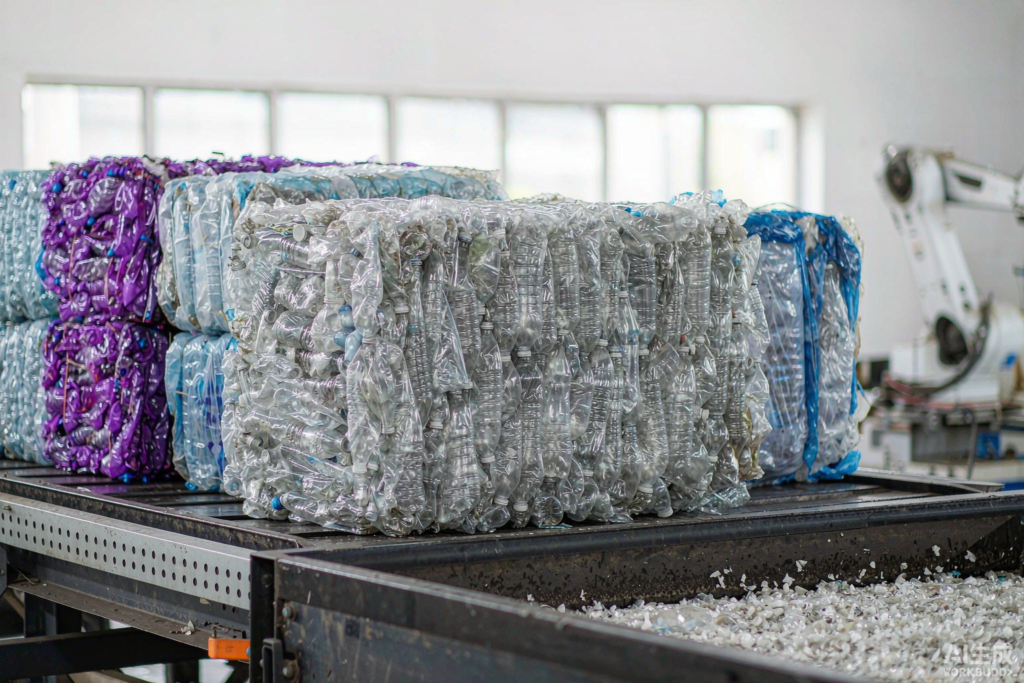
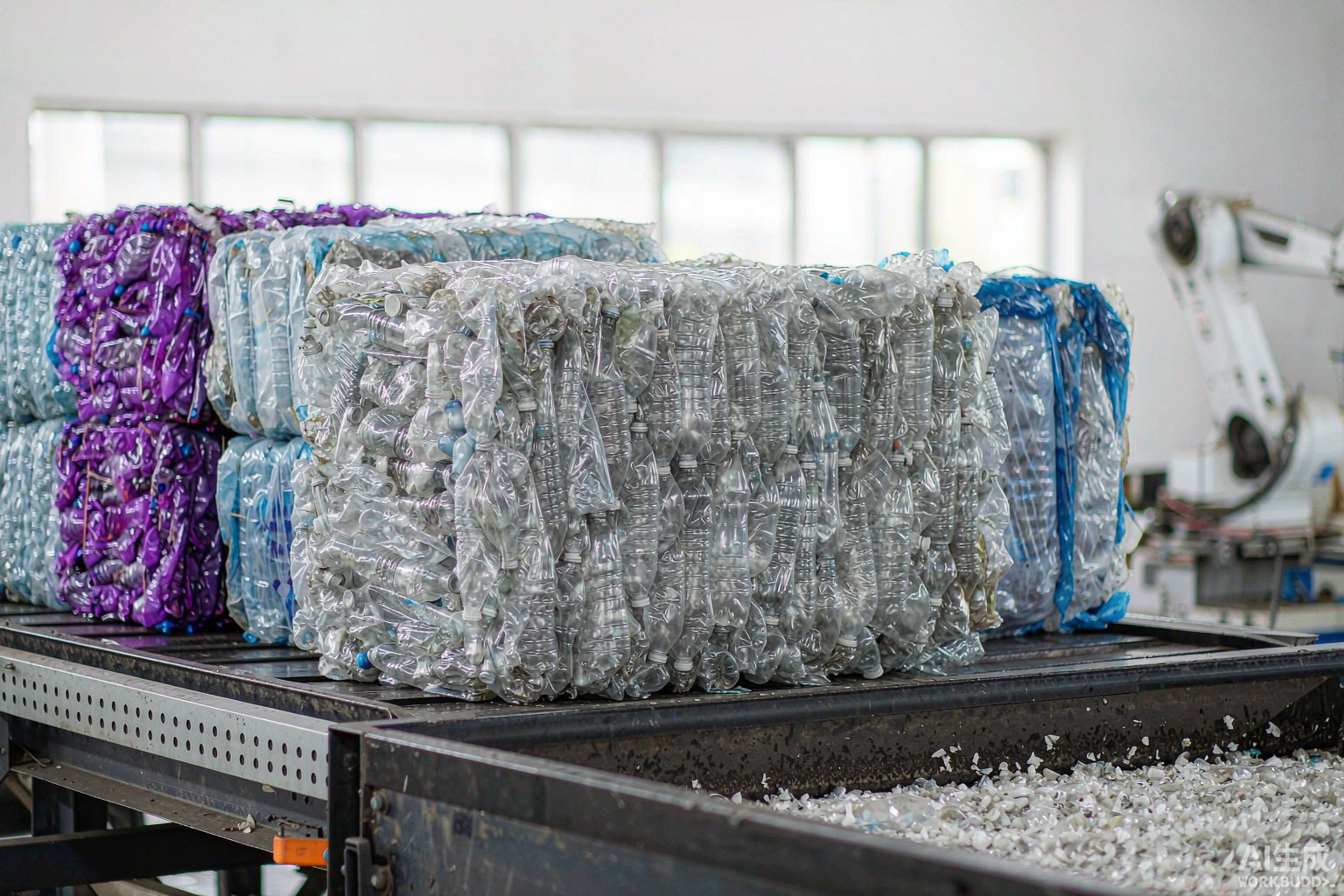
Recycled PET acoustic panels were born circular. The material chain runs from post-consumer bottles to fiber to felt without chemical binders, which gives the panels three circular properties that specifiers can verify:
- Single-polymer simplicity. A PET felt panel is one material — no fabric adhesives, no laminated mystery layers — so offcuts and decommissioned panels can re-enter the PET recycling stream.
- Mechanical fixing compatibility. Panels installed on z-clips or rails demount cleanly; the panel survives the wall, enabling reuse rather than just recycling.
- Documented recycled content. Percentage-by-weight declarations feed LEED, BREEAM and client ESG worksheets — the paper version of the circular story.
Design for disassembly: the next specification line
The frontier is no longer “is the material recyclable” but “can the installation be taken apart”. Progressive specifiers now ask for demountable fixing details — rails instead of adhesive, screws instead of glue — and for product documentation that states the disassembly sequence. Distributors should expect the question in tenders: a panel with excellent absorption data but a permanent-bond installation detail increasingly loses the circularity scoring round.

Building the take-back habit
Full circularity needs logistics, not just materials. The practical models emerging in the industry:
- Offcut return at installation. Collecting site offcuts with the delivery packaging and returning them with the next container — small volumes, but it builds the operational muscle.
- Decommission-and-redeploy programs. For demountable systems, panels from a refitted floor are cleaned and reinstalled in back-of-house or franchised locations rather than discarded.
- Local reprocessing partnerships. Where PET recycling infrastructure exists, decommissioned panels are granulated into insulation or molding feedstock — closing the loop regionally instead of shipping waste.
What buyers should demand from suppliers
The circular checklist for acoustic procurement is short and sharp: recycled-content declaration with percentage by weight; single-material construction or documented separability; mechanical fixing details as the default; a disassembly statement; and a supplier answer — not silence — on take-back. Suppliers who can tick all five are not just winning sustainability scoring rounds; they are positioning for a decade in which the acoustic layer of every fit-out will be judged on where it goes after the lease ends.
Circular construction will not remain a differentiator for long — it is hardening into a baseline expectation. The acoustic industry’s advantage is that its leading material was circular before the trend arrived. The task now is to build the disassembly, take-back and documentation systems that let the product prove it, panel by panel and project by project.
Designing Panels for a Second Life
Circularity in acoustic products is decided at the design stage, not the demolition stage. A panel that can be unclipped without damage, separated from its substrate, and re-faced can realistically serve two or three fit-out cycles. Manufacturers pursuing this path are simplifying their constructions: mono-material PET felt panels with mechanically fixed edge profiles, rather than laminates glued to timber backings that make separation uneconomic. The same logic applies to fixings – a slat panel installed on a metal rail system can be removed whole, while one bonded with construction adhesive effectively becomes demolition waste the day it is installed.
Take-back schemes are the emerging commercial model. Under these arrangements, the manufacturer or distributor commits to collecting panels at end of use, refurbishing or re-granulating them into new felt. Early pilots in Northern Europe show the economics are viable when transport distances stay regional and the returned panels are a known product line – which argues for standardisation across a supplier’s range. For specifiers, the practical request is a material passport: a document stating what the panel is made of, how it is fixed, and which of its components are recyclable. Suppliers who can issue one are increasingly shortlisted on public tenders that score circularity explicitly.
What Buyers Should Ask Their Acoustic Supplier Now
Four questions separate genuine circular offers from greenwash. What percentage of the panel is post-consumer recycled content, and is it certified? Can the panel be removed and reinstalled, or is first removal destructive? Does the supplier offer a take-back or recycling route, and under what conditions? And is the environmental data verified by a third party, such as an Environmental Product Declaration? Panels that answer all four well tend to be from manufacturers who have already simplified their product architecture – and those are the suppliers whose products will still comply when end-of-life requirements move from voluntary scoring to regulation across more markets.
Key Takeaways
- Circularity is decided at design stage: unclippable, mono-material, mechanically fixed.
- Take-back schemes work regionally on standardised product lines.
- Ask four questions: certified recycled content, removability, take-back route, third-party verification.
- A material passport is becoming a tender-scoring requirement, not a novelty.
The regulatory direction is worth stating plainly, because it converts these questions from courtesy into schedule. Several European jurisdictions are moving toward mandatory whole-life carbon reporting on larger projects, and construction-product databases increasingly require end-of-life scenarios to be declared alongside performance data. Panels with published recyclability, verified recycled content, and documented disassembly will pass through those requirements without redesign; bonded composite products will either carry the reporting burden or exit the specification. Forward-looking distributors are already sorting their catalogues this way, positioning circular products as the compliant default for public and institutional work while treated products continue to serve projects without those obligations. The sorting costs nothing today and determines who holds the specification positions when the rules harden – which, on the current trajectory, is a matter of years rather than decades.