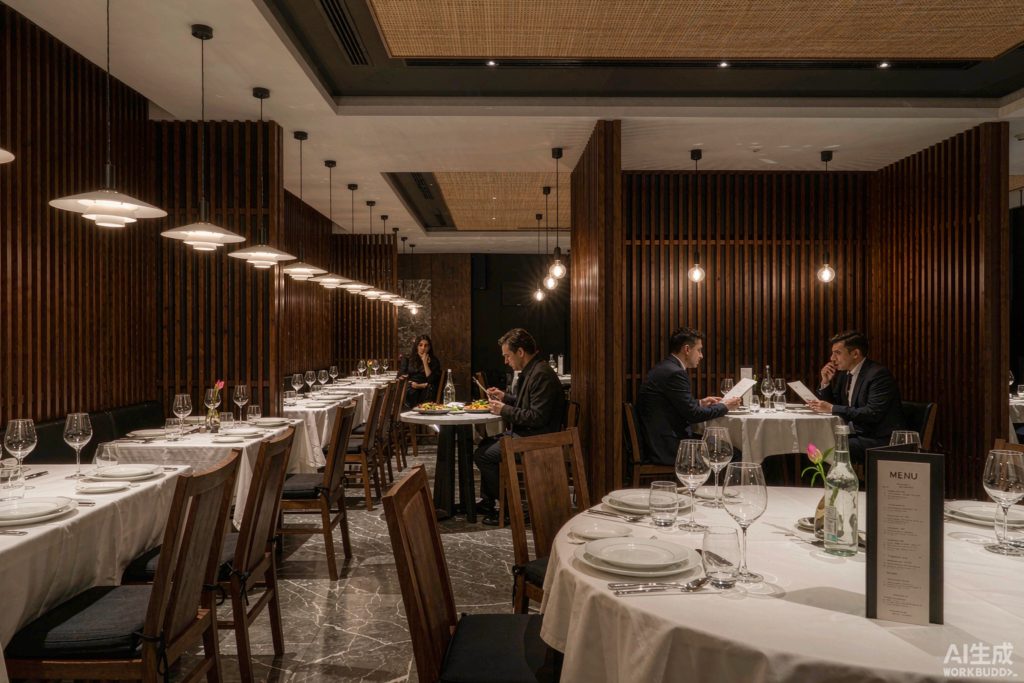
Hospitality design has a new obsession, and it is one you cannot photograph: silence. The “quiet luxury” movement — interiors defined by natural materials, soft geometry and restraint — has made acoustic comfort the invisible marker of a premium property. Guests may not name reverberation when they review a hotel, but they consistently use its vocabulary: “peaceful”, “intimate”, “we could actually hear each other”. For hoteliers and the distributors who serve them, acoustics has moved from a code requirement to a brand asset.
Why sound became a luxury signal
Luxury interiors spent a decade chasing visual drama — hard stone, glass, polished terrazzo, dramatic double-height lobbies. Every one of those choices is acoustically hostile. As properties converged on the same look, operators discovered the differentiator was not another marble lobby but the way a space feels at 7 a.m. and 11 p.m.: calm, private, unhurried. Sound is the sense that signals quality most directly and is the hardest to fake — which is precisely why the industry now treats it as a design material in its own right.
The product language of quiet luxury
The movement’s material palette — timber, felt, linen tones, matte finishes — happens to be the acoustic industry’s catalog. Three product families carry the trend:
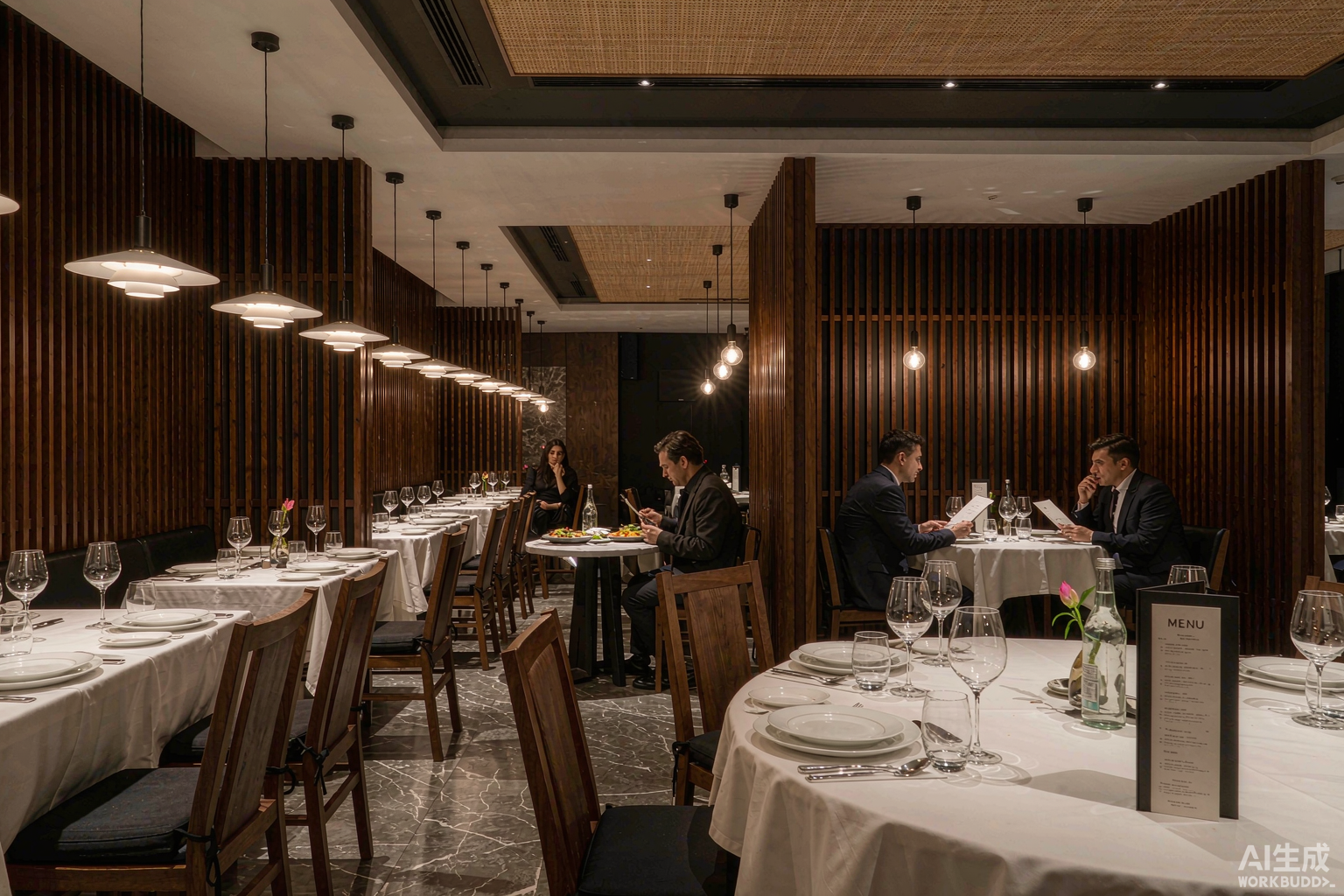
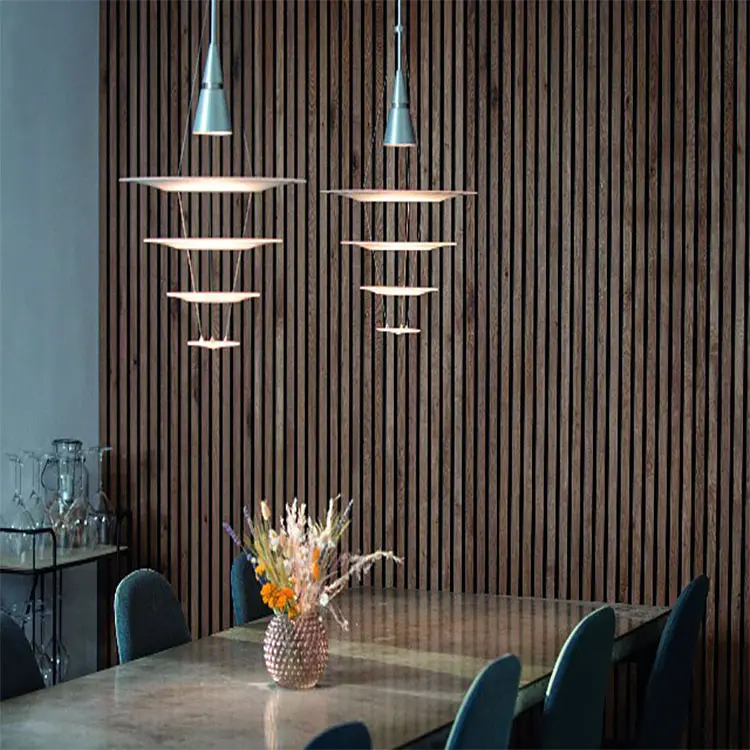
- Wood slat acoustic panels. Real veneer over a PET felt core delivers warmth on the wall and measurable absorption behind it. In lobbies, restaurants and guest corridors, slats have become the default statement surface for premium properties.
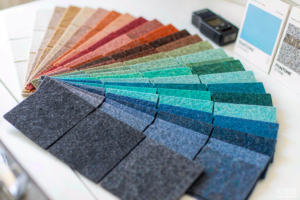
- PET felt panels in muted palettes. Deep greens, warm greys and terracotta felt panels absorb banquet-hall noise and read as intentional design rather than treatment.
- Concealed overhead absorption. Ceiling clouds and baffles in low-contrast colors do the heavy acoustic lifting above dining rooms and ballrooms without announcing themselves.
Where hotels spend their acoustic budget
Operators prioritize by guest-experience impact. Guest-room wall partitions remain a construction matter, but the fit-out budget flows to three zones. Restaurants and bars come first: speech privacy between tables is the most complained-about acoustic issue in hospitality, and slat-and-felt combinations solve it while elevating the room. Ballrooms and event spaces follow, where Reverberation Time targets are now written into brand standards. Spas and wellness floors complete the picture — spaces sold on tranquility cannot deliver it in a reverberant room.
What this means for the supply chain
For distributors, hospitality is the segment where acoustic knowledge converts most directly into margin. Designers arrive with mood boards and Reverberation Time targets but little product literacy; the distributor who can translate a design intent into a panel specification — thickness, mounting, fire class, veneer — owns the order. Three practical plays work consistently:
- Sample libraries that match the trend palette. Keep the quiet-luxury colors — walnut, oak, sage, charcoal — in demo form; hospitality decisions are made by touch as much as by datasheet.
- Package the story. A one-page “acoustic concept” per space type (restaurant, ballroom, spa) with recommended products and NRC data moves projects faster than any catalog.
- Protect the timeline. Hotel fit-outs sequence brutally; a supplier who can hold color batches across phased deliveries becomes irreplaceable.
An outlook measured in reviews
The quiet luxury trend shows no sign of reversing, and its acoustic dimension is now embedded in brand standards at every major operator. The properties that win guest loyalty will be the ones that sound as considered as they look — and the panel suppliers and distributors who understood that early will be specified again and again, in market after market.
The Materials Language of Quiet Luxury
Walk through the hotel lobbies being shortlisted for design awards this year and a consistent palette emerges: fluted wood, wool-blend textiles, limewash plaster, and – increasingly – PET felt in muted mineral tones. The material reads as textile from a distance, which is precisely why designers accept it in spaces where a perforated metal panel would feel clinical. Because acoustic felt absorbs rather than reflects, lobbies keep their softness without the deadened, carpet-tile atmosphere of older business hotels. The quiet-luxury aesthetic is not minimalism at any cost; it is warmth with discipline, and acoustics are the invisible half of that discipline.
Manufacturers have responded with finishes engineered specifically for this segment. Two-tone felt laminates that reveal an accent edge when cut, veneer-faced slats in smoked oak and walnut, and felt with a tested NRC of 0.85 or higher in 12 mm thickness all target the same brief: silence that never looks like an acoustic product. Guests rarely notice any of it – which is the point. The measurable outcome is longer dwell time in bars and lounges, lower complaint rates on premium floors, and higher scores in post-stay surveys that mention atmosphere. Several European groups now write acoustic performance into their fit-out standards alongside lighting levels and furniture specifications, which converts a design preference into a procurement requirement.
Positioning Your Offer for Specification-Driven Projects
For suppliers, the commercial lesson is to sell outcomes rather than panels. Provide the acoustic consultant with lab-tested absorption data per frequency band, give the designer a physical sample box in the actual project palette, and give the contractor a fixing detail that their own team can install without specialist labour. Projects in this segment rarely fail on product performance; they fail on the friction between those three audiences. Importers who package all three – data, samples, and installability – into one submission are seeing conversion rates on luxury hospitality tenders climb, even against cheaper competitors. Quiet luxury rewards suppliers who make silence easy to specify.
Key Takeaways
- Quiet luxury is warmth with discipline – and acoustics are its invisible half.
- PET felt in mineral tones and veneer slats in smoked oak now read as luxury materials in their own right.
- Sell outcomes: absorption data for the consultant, samples for the designer, installability for the contractor.
- Packaging all three in one submission wins luxury hospitality tenders even against cheaper bids.