Every product family in acoustics has an environment it fears. Fabric sags, glass fiber clumps, unprotected MDF swells and untreated wood cupboards. Yet the rooms that need absorption most — swimming pools, spas, basements, indoor water parks, plant rooms — are exactly the humid ones. Choosing moisture-resistant acoustic materials is a materials-science decision, and the options are clearer than most buyers expect.
PET felt: the humidity champion
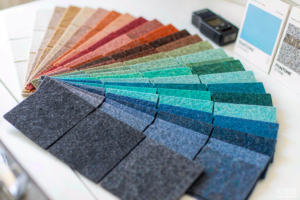
Polyester fiber is hydrophobic by nature: it does not absorb water, swell or support mold growth. PET acoustic panels hold their geometry and absorption performance through humidity cycles that destroy fabric-wrapped products. This is why PET wall panels and baffles have become the standard answer for natatoriums, wellness centers and basements. Two installation caveats apply:
- Condensation is not absorption. In pool halls, moisture moves as airborne vapor and condenses on cold surfaces. Ventilation design remains essential; panels handle humidity, not standing water or direct water jets.
- Fixings must match. Stainless or coated fasteners and moisture-rated adhesives prevent the failure that gets blamed on the panel.
Wood products: possible, with discipline
Wood slat and perforated panels can serve humid spaces when engineered for it: sealed edges, moisture-resistant MDF or plywood cores, marine-grade finishes on all six faces, and climate management in the room itself. The decisive factor is factory sealing quality — a veneer panel with unsealed cut edges will telegraph every humidity swing within a season. In pool halls, wood belongs on the upper walls and ceilings away from splash zones, with PET felt handling the wet-adjacent areas.
What to avoid
- Standard fabric-wrapped panels — sagging, staining and microbial growth in damp air.
- Open-cell foam — absorbs moisture, loses structure and can harbor mold.
- Unsealed MDF — swells irreversibly at the first humidity spike.
- Paper-faced products of any kind in wet or condensing zones.
Specification checklist for humid projects
Confirm panel material hydrophobicity, request humidity-cycle test data or reference projects, specify stainless fixings, detail ventilation with the HVAC engineer, and walk the plan with your supplier before ordering — the cheapest time to fix a moisture problem is on paper.
MST Acoustics for humid environments
Our PET panel families are the default recommendation for pools, spas and basements, and our wood slat lines are offered with sealed-edge, moisture-resistant construction for conditioned humid interiors. Reference installations and fixing schedules are available on request — humid rooms punish improvisation and reward specification discipline.