

MST has brought a second PET felt pressing line into full production this quarter, completing a capacity programme that began with the plant layout review eighteen months ago. The addition roughly doubles monthly output on standard panel formats and — more important for distributors — removes the single-line dependency that made lead times fragile whenever a major project landed alongside regular demand.
What was installed
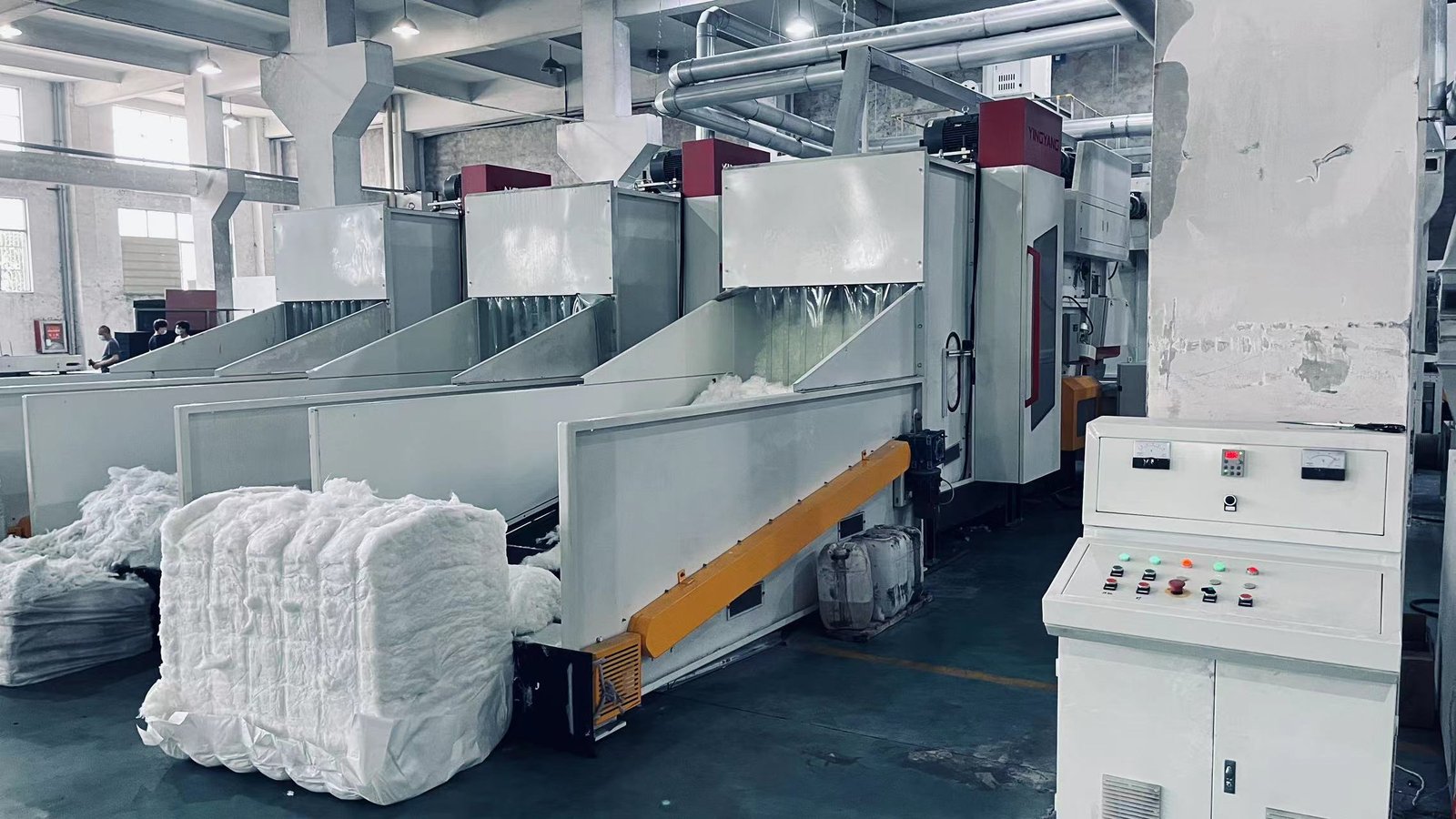
The new line covers the full process from fibre opening through to cutting and edge finishing, configured for the 9 mm to 24 mm range that accounts for the majority of orders. It is deliberately specified for the standard formats and colours rather than for custom work, because the bottleneck in previous years was not the ability to make unusual panels but the ability to keep standard stock flowing while custom batches occupied the schedule.
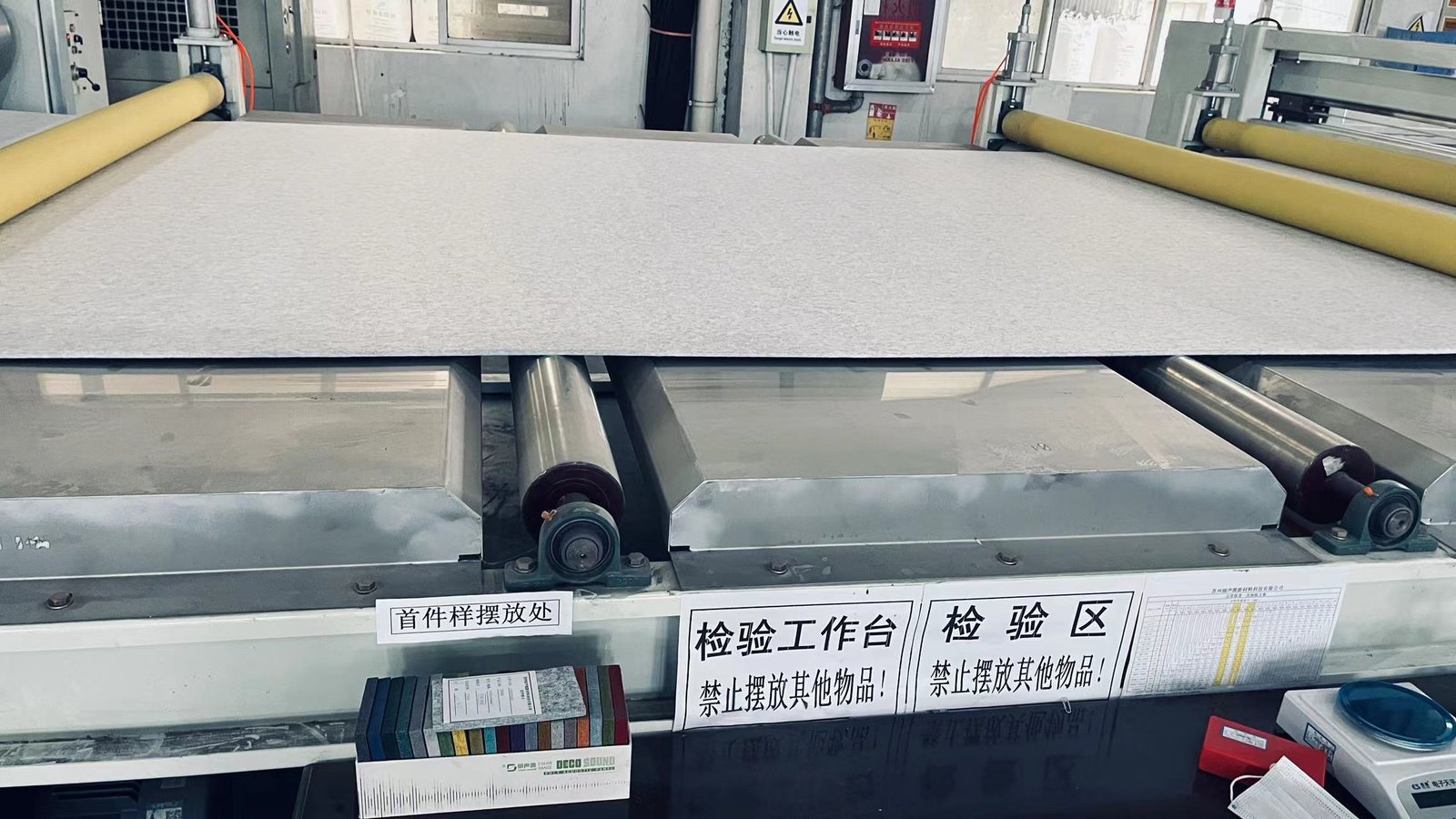
Alongside the press, the line includes an in-line thickness gauge and an automated visual inspection station. Both feed data into the production record for each batch, which means a panel’s density and thickness can be traced to the shift that made it — a capability that matters when a client asks whether a re-order will match an earlier delivery.
What it means for lead times
Standard-format orders in core colours now move through a shorter production window, because the two lines can be scheduled in parallel rather than sequentially. The practical effect is most visible in the seasonal peaks: the summer window that previously required six to eight weeks of advance notice can now be served with less forward planning, and quick-ship stock replenishment no longer competes with project orders for the same press time.
Custom colours and custom geometry still follow their own schedule, since dye-lot planning and CNC time are separate constraints. But those orders now run without displacing standard production, which is what caused the most frustrating delays for distributors in the past: a small custom order for one client delaying a container of standard panels for another.
Quality control changes
Doubling capacity without doubling variation is the real challenge of any expansion, and it is addressed in three ways. First, both lines run to the same process parameters, with the second line’s settings derived from the first rather than developed independently. Second, the in-line gauges report to a shared system, so a drift on either line is visible immediately rather than at final inspection. Third, batch samples from both lines are retained in the same archive, which is what allows colour and density to be matched across lines when a client re-orders.
The quality team has also added a cross-line audit: every week, a random batch from each line is inspected by the team responsible for the other. It is a simple practice and it catches the small divergences that accumulate when two lines are run by different shifts.
Allocation planning for 2027
With capacity in place, the constraint shifts from production to planning. Distributors will be asked to submit rolling forecasts earlier than before — ideally by the end of November for the first half of 2027 — so that both lines can be scheduled against real demand rather than reacting to orders as they arrive. Forecasts above agreed thresholds will carry confirmed production slots, in the same structure used for the existing calendar programme.
The allocation logic remains unchanged in principle: committed volume earns priority, and stock of standard formats is held to protect quick-ship commitments. What changes is the ceiling — the volume at which a distributor’s growth starts to require negotiation rather than notification is now materially higher, which is the point of the investment.
The strategic view
Capacity expansion is usually presented as a growth story, and it is, but the more accurate description is a reliability story. Distributors do not switch suppliers because a factory is small; they switch because a factory cannot deliver when promised. A second line reduces that risk, shortens the recovery time from any single-line interruption, and gives the sales team room to commit to project schedules that previously would have been declined.
The next phase of the programme addresses warehousing and despatch, which is where the new capacity will meet its next constraint. That work is scheduled to complete before the 2027 peak season, and details will be published to distributors as the layout is finalised.
What distributors should do differently now
Capacity changes behaviour on both sides, and it is worth being explicit about what the company expects. On the distributor side, three habits become more valuable. First, share the project pipeline earlier, because with two lines the factory can plan around known peaks rather than reacting to orders; a distributor who tells the account manager about a hotel programme in October gets a better schedule than one who orders in January. Second, use standard formats and core colours where the design allows, since those are what the second line was built for and what the quick-ship programme protects. Third, consolidate orders, because a single container of mixed items costs less per square metre to ship than two part-loads.
On the factory side, the commitments are just as concrete. Standard-format lead times are now stated in days rather than weeks for stock colours. Custom batches carry a committed production week at order confirmation rather than an estimate. And the recovery from an unexpected interruption is measured in days, not months, because a second line provides redundancy that a single line never could.
There is one thing capacity does not fix, and it is worth naming: specification quality. A factory can produce a container of panels in days, but if the specification was wrong the panels are wrong faster. The sales team’s emphasis on technical support and certification is the counterpart to the production investment — the two only pay off together.
For partners planning 2027, the practical recommendation is to rebuild the annual plan around the new lead times rather than the old ones. Distributors who continue to order with the buffer they needed in previous years will carry stock they do not need, while those who order to the new reality can hold less capital in inventory and still meet project dates. The account team will run those planning sessions through the autumn.
Key Takeaways
- A second pressing line roughly doubles standard-format capacity and removes the single-line dependency that made lead times fragile.
- In-line thickness gauging and visual inspection record each batch, so a re-order can be matched against the original delivery.
- Custom colours and geometry run without displacing standard production, which was the main cause of past delays.
- Weekly cross-line audits keep two lines behaving as one process.
- Distributors should submit 2027 forecasts by the end of November to secure production slots.
The investment is best understood as a reliability story rather than a growth story: distributors do not leave suppliers because a factory is small, they leave because it cannot deliver when promised. A second line shortens recovery from interruption and lets the sales team commit to schedules that would previously have been declined.