

You have a handover date, a specification and a supplier who says the panels can be made. Then the schedule unravels: the colour sample arrives three weeks late, the approved sample does not match the production batch, and nobody can tell you whether the container lands before the fit-out team demobilises. Acoustic panel samples and lead time are the two variables that quietly decide whether a project hits its date, yet they are usually treated as an afterthought in the enquiry. This guide is written for architects, acoustic consultants, main contractors, distributors and purchasing managers who need a realistic picture of the path from the first sample box to the loaded container. It explains what a sample actually proves, how the approval gates stack up, and where production and shipping time is genuinely consumed.
We are a supplier-side technical team, so this is not a consumer DIY piece. It is the same planning conversation we have with B2B buyers each week, organised so you can build a credible programme before you commit to a date. Durations described as indicative are early-planning ranges only; the formal quotation, its schedule and its approval record are always the controlling source. For product context before you read on, see the PET felt and fabric panel category.
Why acoustic panel samples and lead time matter before you order
Buyers ask two questions in almost every enquiry: can I see and approve the panel before it goes into production, and when will it arrive? They sound separate, but they are one chain. A sample is the physical proof that a supplier can make the construction, finish and tolerance you specified; lead time is the sum of every step required to move from that proof to a shipped container. If you compress one, you usually pay for it in the other. Skipping a sample to save a week is the most common way to lose a month to a rejected batch.
The reason is that acoustic panels are made-to-order assemblies, not shelf goods. A decorative facing, a density, a backing felt, a groove pattern and a colour are combined to order, and each combination has its own approval and production path. A stocked colour on a standard module behaves like a fast order; a custom match on a developed pattern introduces lab dips, tooling and trial runs that run sequentially. Understanding which path your specification sits on is the whole skill of planning acoustic panel samples and lead time honestly, and it starts with knowing what goes into the box.
What goes into an acoustic panel sample box
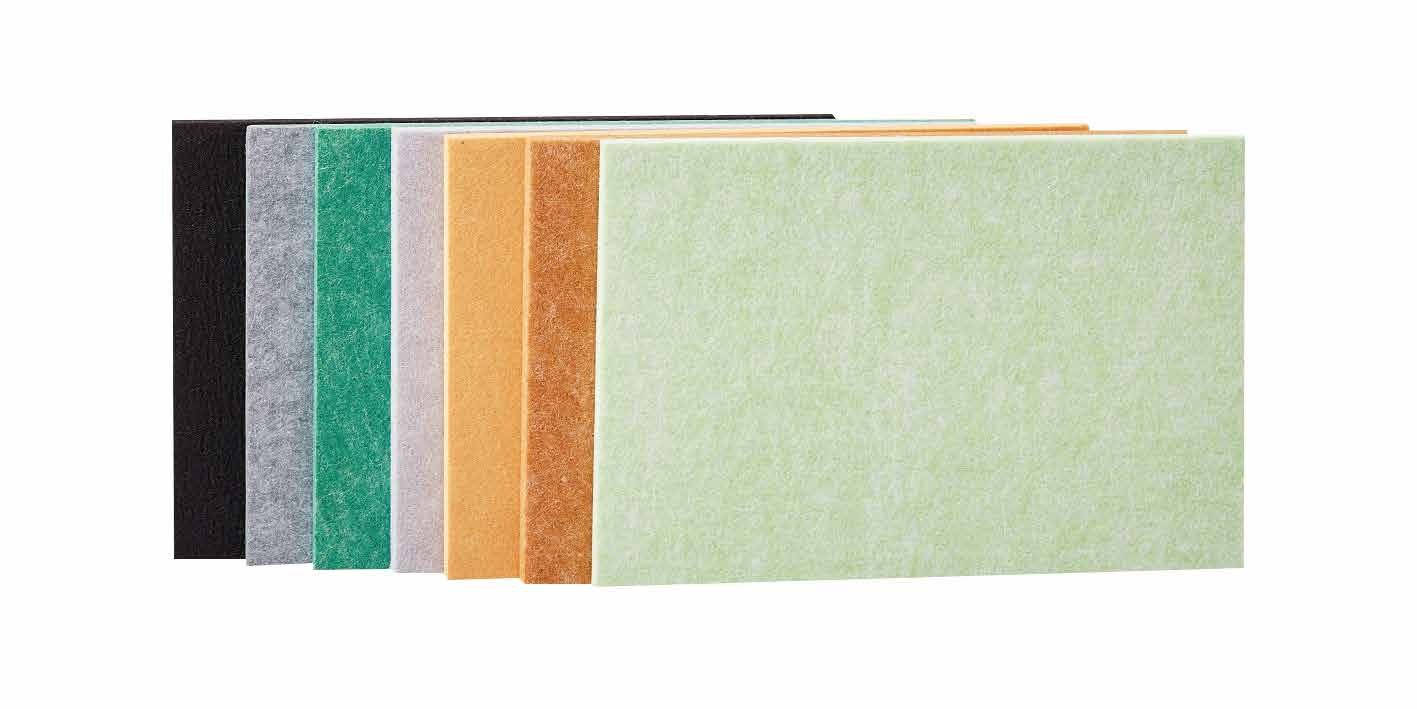
Not all samples are equal, and the word is used loosely. A stock swatch is a small offcut from a standard panel; it proves colour and texture but little about your exact build-up. A cut-down production sample is made from the construction you are ordering; it proves core, facing, backing and thickness. A full-size prototype reproduces the actual panel, including edge and joint details, and is what a feature area needs. A project mock-up assembles several panels so joints, setting out and joins can be judged together. Ask which of these you are being sent, because a swatch should never be used to approve a bespoke assembly.
A useful acoustic panel sample box contains more than panels. It should carry an item list tying each piece to a schedule reference, the finish reference or colour card number, the construction it represents and the date it was made. For a wood-faced panel include the veneer and slat pitch; for PET felt include density and colour lot; for a printed face include the exact artwork revision. Photograph the box on arrival and keep one set as the signed acceptance standard for production. If a dispute arises later, the reference sample under agreed viewing conditions is the only reliable arbiter, not a memory of how the colour looked on site.

The sample approval process, gate by gate
A dependable sample approval process is a short chain of written gates. Each gate ends with an approve-or-reject decision before the next begins, and the whole chain should be visible on one schedule. Run them in sequence, not in parallel: a print proof approved before the substrate is fixed is a proof of the wrong thing.
- Enquiry and feasibility. Send sizes, construction intent, finish references and target documents. The supplier confirms what is achievable and flags maximum one-piece sizes or tooling needs.
- Specification freeze. Quantities, sizes, tolerances, finish references and mounting conditions are fixed in the document production will build to.
- Sample production. The representative sample or prototype is made from the agreed construction, not a generic stock piece.
- Review and written approval. You approve, reject with comments, or request a revision. The approved sample becomes the acceptance standard, retained by both sides.
- Pre-production check. The first output is measured against the approved sample and schedule before the full batch is released.
Colour and print deserve special mention because they are the most common cause of a failed gate. Ask for the colour by card reference where a stocked range exists; the custom colour acoustic felt panel page shows the stocked approach. A true custom match needs a lab dip and a signed physical reference, and the same logic applies to a graphic face — see the printed acoustic felt wall panel page for finishes that can be applied to a panel. State the viewing conditions for approval, since the same felt reads differently under daylight and site lighting.
Acoustic panel production lead time by product family
Once a sample is approved, the clock moves to production. Acoustic panel production lead time is driven less by the number of panels than by the number of distinct operations: cutting, bonding, facing, grooving, colour matching, printing and packing. A repeat order of one stocked module is short; a first order with several new finishes queues each finish behind its own setup. Three factors dominate the schedule.
Material availability. Stocked gauges and colours move quickly; a custom dye lot or a specific veneer must be booked into the material plan. Setup and tooling. A new groove pitch, perforation pattern or print file needs a trial before the run is released. Queue position. Every factory runs a production calendar, and a made-to-order panel competes for slots with other orders; your place in that queue is set by when the specification and sample are approved, not by when you first asked for a price. This is why the approval date, not the enquiry date, is the number that should drive your programme.
A realistic acoustic panel samples and lead time timeline
The table below shows an indicative planning sequence for a conventional made-to-order acoustic panel order moving from enquiry to a loaded container. Treat every figure as a range to be confirmed in the formal quotation: actual timing depends on product family, finish complexity, order size, destination and the production calendar at the time of order. It is included to show where time is actually spent, so you can see which gates are worth protecting.
| Stage | Indicative duration | Can it run in parallel? | What controls it |
|---|---|---|---|
| Enquiry and feasibility reply | A few working days | Partly, with spec drafting | Completeness of the enquiry |
| Quotation and specification freeze | About one week | No — precedes samples | Decisions on size, finish, docs |
| Stock sample dispatch and courier | A few days to about a week | Yes, against documentation | Destination and courier service |
| Custom sample / lab dip / print proof | One to several weeks | No — gates are sequential | Colour, tooling, artwork revisions |
| Sample review and written approval | Several days | No — gates production | Your internal sign-off chain |
| Production of the ordered batch | Several weeks | Only with material booking | Finish complexity and queue |
| Pre-shipment inspection and packing | A few days | No — follows production | Inspection scope and cartons |
| Freight to destination port | Varies by route and service | After handover to carrier | Route, incoterm, space |
Read the third column carefully. The stages that cannot run in parallel are the critical path, and most of them sit on the approval side rather than the factory side. Buyers often push hard on production speed while leaving the approval chain undefined; the table shows why that is the wrong lever. Protect the sample and approval gates and the rest of the programme becomes predictable. Related reading follows below.
Application scenarios: where the schedule bites hardest
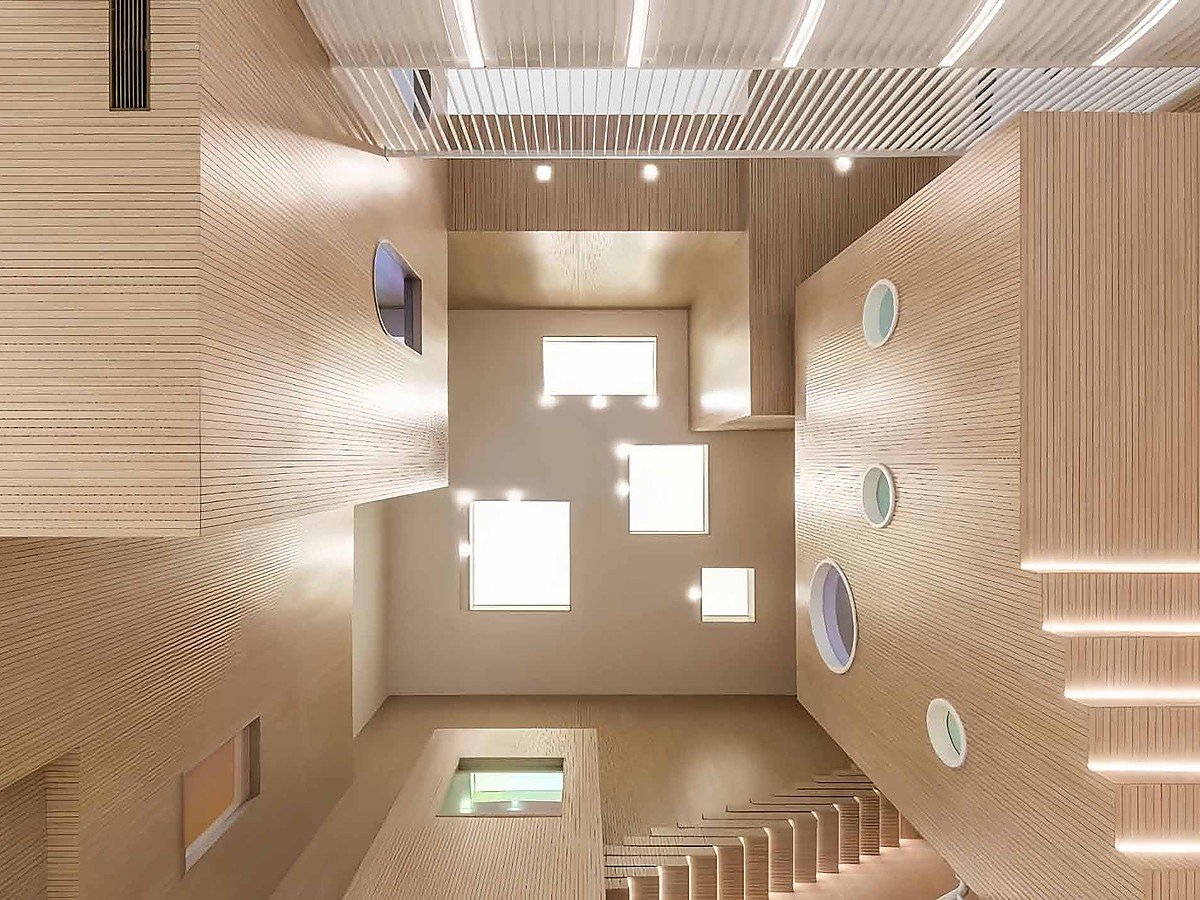
Some projects feel lead time more sharply than others. In a tender-led fit-out, the specification is fixed and the completion date is contractual, so a late sample approval flows straight into a delay penalty; the answer is to order samples during the tender period, not after award. In a distribution program, the risk is different: you are stocking a range, so the priority is repeatability and a signed reference sample that keeps later batches consistent, even if the first order takes longer. In a refurbishment or a phased hotel programme, panels arrive in releases, and the schedule must align each release with the site’s access windows rather than shipping everything at once.
A feature area with a developed pattern — a grooved or perforated face such as the grooved wood acoustic panel 28/4 — is the case where a prototype earns its cost, because joints and edge details are visible and cannot be corrected on site. At the other end, a large repetitive ceiling or corridor benefits from a stocked module that skips development entirely. Application guides that follow this supplier-side approach are collected under solutions.
An RFQ checklist for samples and production scheduling
A good enquiry lets the supplier give a real sample plan and a real date instead of a guess. Copy this list into your RFQ; the goal is a schedule you can hold a contractor to, not paperwork for its own sake.
- Building type, room, and whether the panel is wall, ceiling or free-standing.
- Panel schedule: nominal size, thickness, finish and quantity per type.
- Sample level required: stock swatch, cut-down production sample, full prototype or mock-up.
- Colour reference by card number, or a physical sample for custom matching.
- Acoustic and fire documents required, with the mounting condition stated.
- Tolerance and measurement datum on dimensions that affect installation.
- Approval route: who signs off, how many revisions are allowed, and the turnaround expected.
- Target delivery date and the contractual milestone it protects.
- Incoterm, destination port, packing method and inspection requirement.
- Whether the order is a one-off or a repeating program with scheduled releases.
- A written request that sample charges, tooling and lead times be shown as separate lines.
Send the same checklist to every supplier you invite to quote. When replies return in the same structure, differences in what is actually included become visible. Full product and documentation ranges are on the resources page.
Common mistakes when planning acoustic panel samples and lead time
The first mistake is approving a generic sample. A stock swatch proves a factory can make a panel, not that it can make yours. The second is treating colour as a decision that can be reversed later; a custom match runs through a lab dip that must finish before production, so a late colour change restarts the gate. The third is assuming sample and production dates are independent, when approval legally gates the batch. The fourth is ignoring peak-season effects — around Chinese New Year and the pre-Christmas fit-out rush, factory slots and container space tighten, and an honest lead time grows; plan the approval earlier rather than expecting the supplier to compress it later. The fifth is quoting a single headline number for lead time without stating what it covers: ex-works production is a different promise from delivered-to-site. Name the start and end point of every duration you are given.
Request a quote for samples and lead time
To scope an order properly, send the panel schedule, finish references and target milestone to the MST Acoustics quotation team. We will confirm the sample level your specification needs, set out the approval gates, and return an indicative schedule with production and freight shown as separate lines so you can see exactly where the time sits. If you are still comparing options, download the catalogue and technical documents from the resources page first. All indicative figures here are for early planning only; confirm every duration, price and classification in the formal quotation issued for your project.
Frequently asked questions
What is a realistic acoustic panel samples and lead time expectation?
It depends on finish complexity, not just panel count. A stocked colour on a standard module follows the shortest path: sample dispatch, approval, production and freight. A developed pattern or custom colour adds a lab dip or tooling trial that runs sequentially. Ask the supplier for the sequence with durations attached, and treat every published figure as indicative until it appears in your formal quotation with a named start and end point.
What should be included in an acoustic panel sample box?
At minimum, a piece representing the exact construction you are ordering, labelled with its schedule reference, finish or colour card number, and production date. For a feature area, include a full-size prototype or a mock-up so joints and edges can be judged. Keep one approved set as the signed acceptance standard for the production batch, and photograph it on arrival.
Can the sample approval process be shortened without risk?
You can shorten it by removing avoidable loops, not by skipping gates. Approve the substrate before the print, decide colour from a stocked card where possible, name one signatory and allow a fixed turnaround for review. You should not skip the representative sample on a bespoke assembly: a rejected production batch costs far more time than the gate you removed.
How does peak season affect acoustic panel production lead time?
Around Chinese New Year and the pre-Christmas fit-out rush, factory slots, material bookings and container space all tighten, so honest lead times extend. The practical defence is to approve samples earlier and place the order ahead of the peak, or to book material and production slots in writing. Ask your supplier for their production calendar when you set the programme.
Are sample panels charged, and are the charges credited against the order?
Stock swatches are often nominal, while full prototypes, custom colours and printed proofs usually carry a charge because they consume setup and material. Policies differ, so ask for sample costs, tooling and freight as separate lines, and whether any amount is credited when the production order is placed. Get the answer in writing with the quotation.
What documents should accompany a sample submission?
Request an item list tying each piece to the schedule, the finish reference, and any available acoustic or fire documentation that describes the exact assembly and mounting condition. Do not accept a headline rating from a different construction as proof for your panel. We do not manufacture certificates and quote no certification numbers here; your supplier should provide the actual report for the assembly you are buying.