Two slat panels with identical acoustics can look like different products — because the veneer is doing the talking. Species, cut, stain and finish decide whether a wall reads warm or cool, classic or contemporary, premium or practical. For distributors building an acoustic range, veneer selection is the single most market-sensitive decision in the catalog. This guide walks through the common options and how to choose among them.
The core species
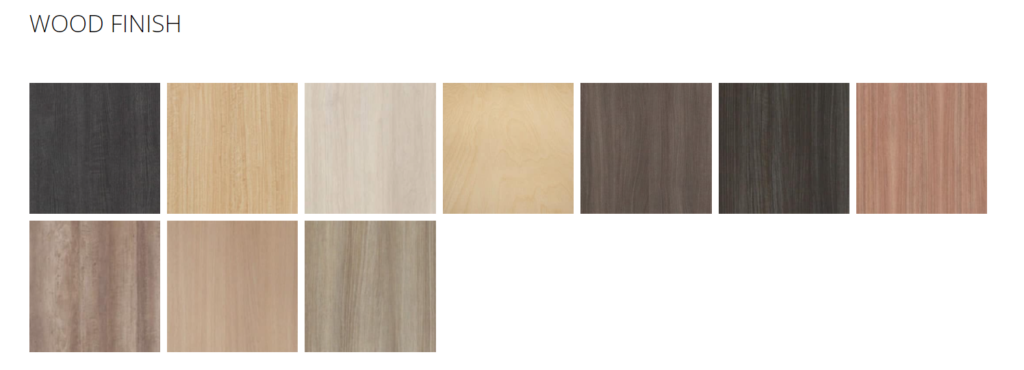
- Natural oak. The default of the segment. Light golden tone, straight grain, broad appeal across Northern Europe, North America and Australia. Oak slat panels photograph beautifully in bright interiors and pair with both white and dark schemes — the safe volume seller.
- American walnut. The quiet-luxury choice. Deep chocolate brown with a soft figure, walnut reads expensive instantly. It dominates premium hospitality, executive offices and home cinemas — smaller volume, higher margin.
- Ash. Pale, even-grained, slightly cooler than oak. Ash suits Scandinavian and Japanese-inflected schemes and takes stains beautifully, which makes it the workhorse behind many “colored wood” SKUs.
- Teak and smoked options. Amber-to-brown tones that anchor warm, moody interiors; strong in boutique hospitality. Smoked or fumed treatments darken the species naturally without heavy staining.
- Dyed and engineered veneers. Black, grey, sage, terracotta — dyed veneers (or consistently colored reconstructions) deliver colors nature does not sell. They answer the design market’s demand for slat walls that match brand palettes.

How finish changes everything
The same oak veneer can present as matte and pale, or oiled and amber, or lacquered and glossy — three different products from one species. Matte and satin lacquers dominate the segment because they resist fingerprints and cleaning without glare; hard wax oils deliver the “natural wood” feel that hospitality loves at the cost of more careful maintenance language. Color consistency across batches is the real differentiator: veneer is a natural material, and disciplined manufacturers control tone with stitch-matching and batch sequencing so that phase two of a project matches phase one.
Matching veneer to market and application
Veneer strategy follows the customer segment. Offices and public buildings order oak and ash for their calm neutrality. Hospitality and retail lean walnut, teak and smoked finishes for intimacy and drama. Residential and e-commerce channels buy the range — but photograph and sell oak above all. A practical distributor catalog carries four to six finishes: one or two light, one or two mid, one dark, one signature color. Fewer, deeper SKUs beat a veneer museum nobody can choose from.

What to check before committing to a finish
- Grain and color consistency policy. Ask the manufacturer how batches are matched and request retained-sample confirmation for reorder programs.
- Fire rating of the finished panel. Coatings and veneers affect the EN 13501-1 / ASTM E84 result — the certificate must describe the finished construction, not the bare board.
- Edge and cut quality. Slat edges are where veneer quality shows; inspect pre-production samples under raking light.
- Humidity behavior. Sealed edges on all six faces matter, especially for panels shipping into humid climates or rooms.
The bottom line
Veneer is where acoustic panels stop being building materials and start being interior design. Choose a focused range of species and finishes that mirror your market’s architecture, hold your supplier to batch-level color discipline, and let the samples do the selling — because in slat panels, the eyes always decide before the ears confirm.
Engineered Veneers and Consistency at Scale
Natural veneer carries one structural characteristic buyers must plan for: variability. Two leaves sliced from the same flitch differ in grain and tone, and panels produced months apart will show it. Engineered veneers – reconstructed from dyed and re-composed wood blocks – answer that problem with near-perfect repeatability across thousands of square metres and long production windows, at a modest cost premium over commodity species. For a hotel group rolling out identical rooms across floors, or a retail chain fitting dozens of stores, engineered oak and walnut deliver the species aesthetic with batch-to-batch consistency that natural leaves cannot guarantee.
Finishing choices extend the palette further. UV-cured lacquers in matte and satin sheens protect veneer in high-touch areas; fire-retardant impregnation is available for veneers destined for regulated interiors; and stained treatments push inexpensive species toward the appearance of premium ones. The selection conversation should cover three questions: how much grain variation the design tolerates, which fire classification the project requires of the finished panel, and what sheen the lighting scheme will reveal. A matte finish hides seam lines and fingerprints; a satin finish amplifies grain depth under grazing light – a favourite effect for feature walls behind reception desks.
Matching Veneer to Project Type
Experience across projects suggests reliable pairings. Corporate offices take engineered oak on felt backing as the default: calm, documented, and consistent across phases. Hospitality leads with darker, richer tones – smoked oak, walnut, dark ash – where warmer lighting rewards grain depth. Education and public buildings favour durable, mid-tone species with matte lacquer for cleanability and impact tolerance. Retail uses veneer as brand material, where a signature tone applied consistently becomes part of the store identity. Whatever the segment, the discipline that protects the result is the same: approve a physical sample of the actual production veneer, not a printed photograph; confirm the fire certification covers veneer and substrate as an assembly; and archive the approved sample with the manufacturer so re-orders match years later. Buyers who keep that discipline find wood-slat acoustic panels among the most dependable premium materials in their catalogue.
Key Takeaways
- Natural veneer varies; engineered veneers guarantee batch consistency across thousands of square metres.
- Confirm fire certification covers veneer and substrate as an assembly.
- Matte lacquer hides seams; satin amplifies grain under grazing light.
- Approve a physical production sample and archive it – re-orders must match years later.
Lead-time planning deserves a closing note because veneer schedules drive project sequences. Natural-veneer production depends on flitch availability, and popular species in large quantities can carry waiting periods that engineered alternatives do not; ordering early against a confirmed colour standard removes the exposure. Mixed orders – natural veneer feature walls alongside engineered veneer backgrounds – should be quoted as one production batch so colour relationships are checked at the factory rather than discovered on site. And for projects spanning multiple phases, the archive-and-reference discipline mentioned earlier applies doubly: a phase-two wall that must sit beside phase one is judged against the archived sample, not against memory. Teams that plan veneer as a schedule item rather than a last-minute selection avoid the two classic failures: a delayed handover and a mismatched wall.