Few product categories have transformed their material base as completely as architectural acoustics. Ten years ago, the default sound-absorbing panel was fiberglass or mineral wool wrapped in fabric. Today, the fastest-growing products in the category are made from recycled PET — the same polymer as drinking bottles — converted into dense, colorful, technically capable acoustic felt. The shift is not just environmental; it changed the economics and the supply chain of the whole industry.
From bottle to panel: the supply chain
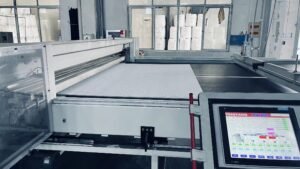
Recycled PET panels start with post-consumer bottle flakes, cleaned and processed into polyester fiber, then thermo-bonded into rigid felt sheets without chemical binders. The result is a panel that is:
- Formaldehyde-free and low-VOC — no resin binder, no added formaldehyde.
- Safe to machine — cut, routed and CNC-shaped without the irritation that glass fibers cause.
- Dimensionally stable — panels hold shape across humidity ranges that challenge wood and fabric products.
- Recyclable again — offcuts and end-of-life panels can re-enter the PET stream.
Why the market followed
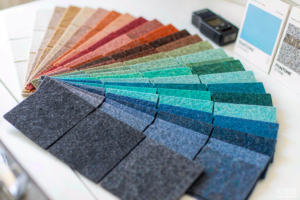
Three forces aligned. First, regulation: indoor-air and emissions rules made fiberglass harder to specify in occupied spaces. Second, certification: LEED and WELL reward recycled content, giving panels a documented reason to exist beyond absorption. Third, design: PET felt arrived in dozens of colors and fabricable formats, letting acoustic products move from utility to interior design feature. Wood slat panels completed the picture by laminating real veneer onto PET felt — natural surface, recycled core.
What buyers should verify
- Recycled content percentage by weight, stated in a declaration rather than a brochure slogan.
- Binder chemistry — true low-emission panels are thermo-bonded, not glued with formaldehyde-based resins.
- Consistency of color across production batches; recycled fiber production rewards factories with disciplined dye-lot control.
- End-of-life story — can offcuts be returned or recycled locally, and does the supplier support it?
MST Acoustics’ position
Our PET panel families are built on recycled-fiber felt produced in-house, with wood slat lines using FSC-certified surfaces. Every year our production converts hundreds of tons of used bottles into acoustic material for offices, schools and public buildings worldwide. For our channel partners, that means a product portfolio whose sustainability claims are material facts — documented, testable, and increasingly the reason projects specify PET over everything that came before.