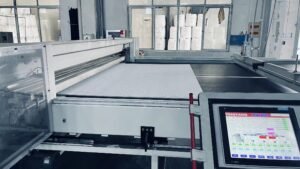
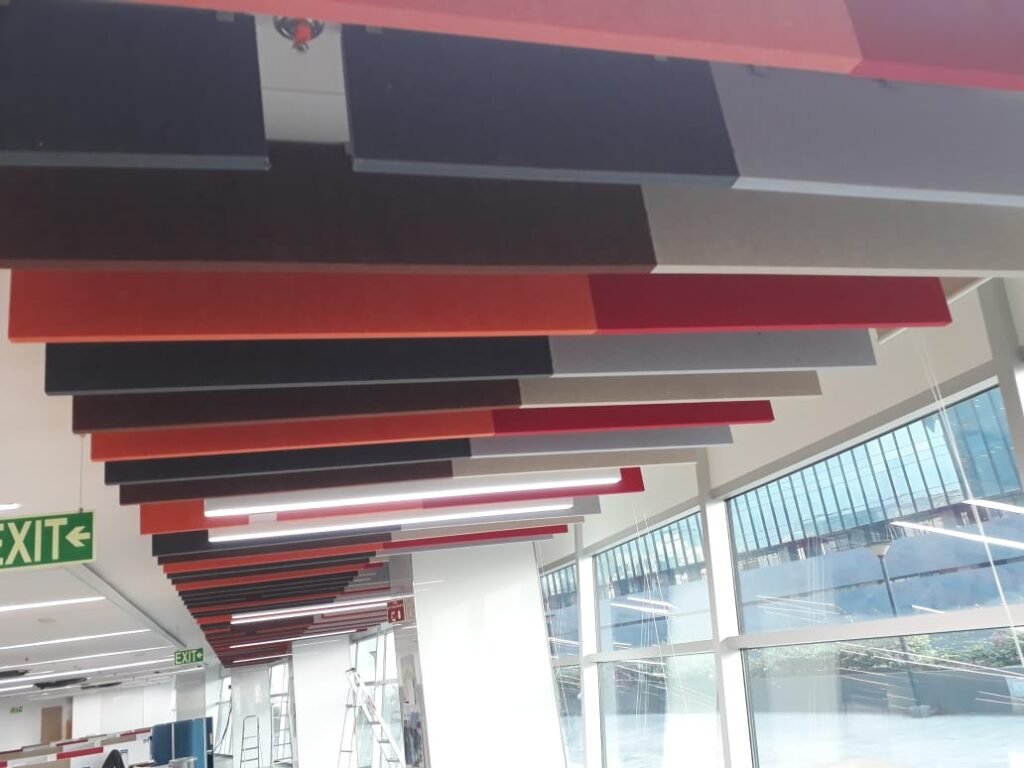
Every fit-out contractor lives by the same arithmetic: the interior program gets shorter every year while the quality bar rises. The industry’s answer across partitions, ceilings and finishes has been modularization — and acoustics is following the same path. Pre-engineered modular acoustic systems, complete with matched fixing hardware and repeatable layouts, are replacing improvised site-built treatments on projects of every size. For panel distributors, this shift changes what buyers actually purchase: not panels, but systems.
What “modular” means in acoustic products
A modular acoustic system is a kit of pre-defined parts: panels in standard modules (600×600, 600×1200 and multiples), matched suspension or fixing components, connection details engineered in advance, and layout drawings that translate directly into site work. Nothing about the acoustics is compromised — the ISO 354 data applies to the exact module and mounting — while everything about execution becomes predictable.
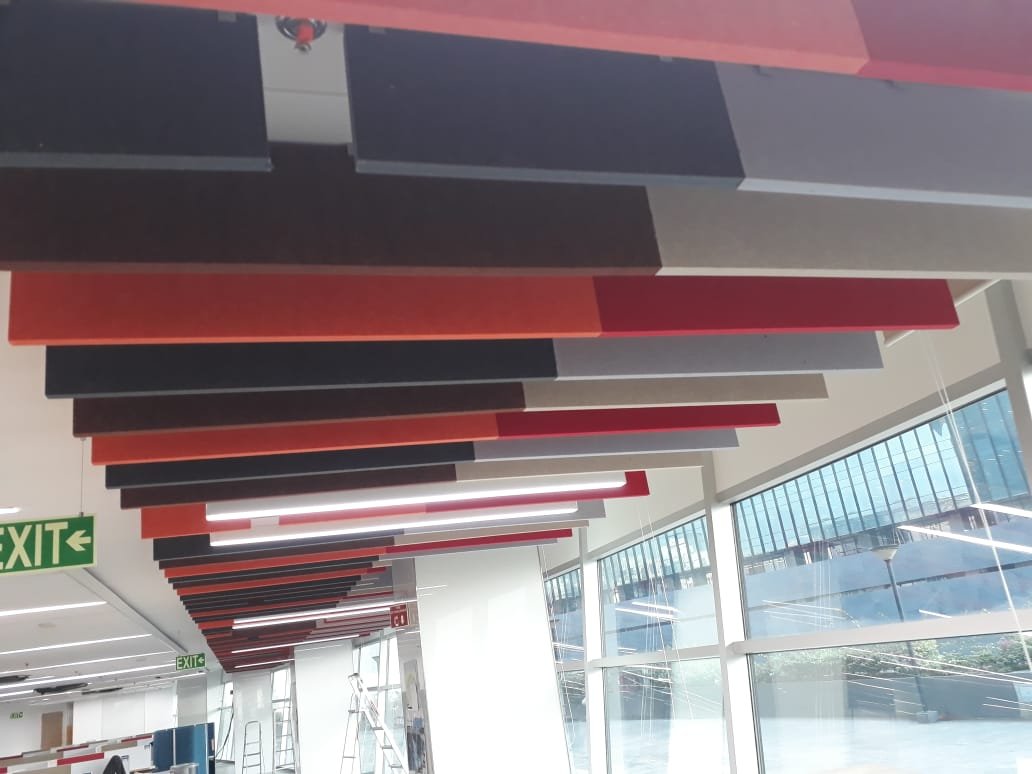
Why contractors choose systems over improvisation
- Speed. Pre-engineered modules install in minutes per unit. A ceiling baffle system with pre-attached cables eliminates the shop fabrication that used to happen on scaffolding; wall panel programs with z-clip rails run without adhesive cure times.
- Predictable quality. Site-built acoustic treatment varies with the carpenter’s skill. Factory tolerances do not. For the contractor, modular means the installed result matches the submittal — the first time.
- Program certainty. Modular quantities are calculated from layout drawings before the site is ready, so materials arrive as the program needs them instead of blocking storage space.
- Clean handover. Standard modules make additions and modifications trivial. When an office is reconfigured, panels move with the layout instead of going to landfill — an increasingly written-in requirement.
The product families leading the shift
Ceiling systems lead adoption. Baffles and clouds with integrated suspension hardware turn the most labor-intensive treatment into scaffold-light assembly, which is why they dominate modern office and education projects. On walls, z-clip and rail-mounted panel programs deliver demountability plus speed, while wood slat panel systems with engineered sub-frame details bring millwork-grade results into modular workflows. Even decorative elements — printed panels, 3D-cut geometries — now ship as standard modules with custom faces.
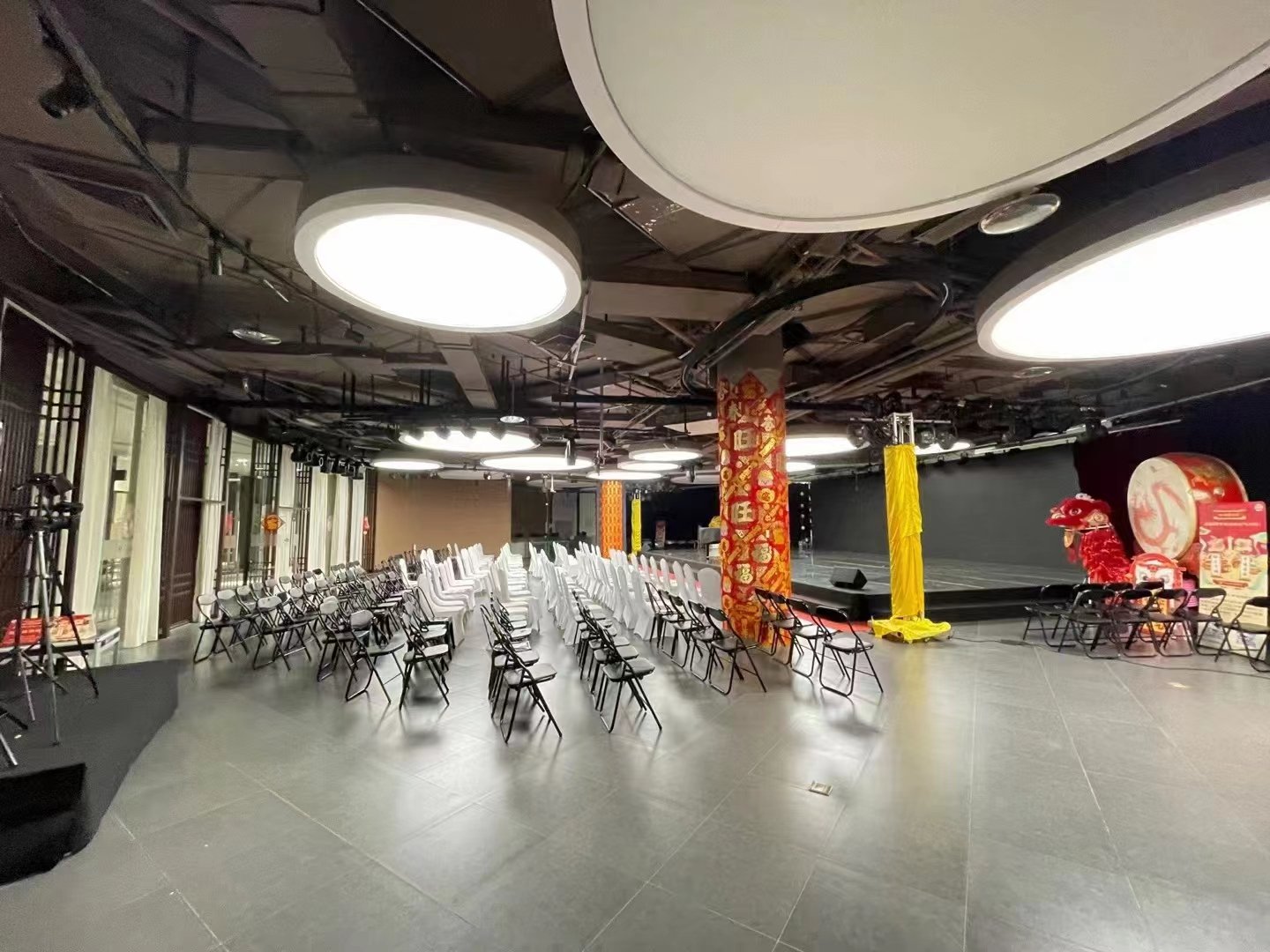
What changes for procurement
Modular procurement rewards different supplier capabilities. The buyer now evaluates: layout engineering support (can the supplier turn a reflected ceiling plan into a panel schedule?), hardware completeness (does the container include every bracket, so the site never improvises?), and batch consistency across phases (will module 400 match module 1 installed six months earlier?). Unit price still matters — but it sits third in the conversation behind engineering support and supply reliability.
For manufacturers, modularization concentrates value in the parts of the offer that are hardest to fake: technical service, tolerance discipline, and repeatable color control. For distributors, it shifts the sales conversation from “panels per square meter” to “systems per project” — a conversation with bigger baskets, stickier relationships and far less price exposure.
The direction of travel
As labor costs rise and programs compress, modular acoustic systems will keep taking share from site-built treatment — the same trajectory that transformed ceiling grids and partition systems decades ago. Suppliers who engineer their product families for modular use now, with matched hardware and layout services as standard, will own the specification sheets that everyone else has to catch up to.
Why General Contractors Are Driving the Shift
The push toward pre-engineered acoustic systems is coming less from designers and more from the contractors who have to deliver programmes. On a typical commercial fit-out, wet trades and bespoke joinery sit on the critical path; an acoustic feature wall that requires site fabrication can add weeks and multiple subcontractor interfaces. A modular system arrives as a kit: panels pre-cut to the site schedule, fixing rails pre-drilled, edge trims matched, and an installation sequence documented by the manufacturer. Contractors quote programmes in days instead of weeks, and – just as importantly – their risk of rework collapses, because the tolerances are resolved in the factory rather than on the scaffolding.
The economics reward both sides. For the manufacturer, standardising panel formats and connector systems cuts production cost per square metre and makes quality control measurable; every panel leaves the line against the same checklist. For the contractor, predictable installation time converts acoustic works from a variable-risk trade into a fixed-price line item. Distributors report that projects specified as modular systems generate fewer site queries, fewer delivery disputes, and far fewer warranty claims – the three cost centres that quietly erode margin on traditional bespoke installations.
What to Check Before Adopting a Modular System
Not all systems marketed as modular deliver the same discipline. Buyers should verify four things before committing. First, dimensional tolerance: ask what deviation from the declared panel size the factory guarantees, because site gaps of uneven width are the most common failure of pseudo-modular products. Second, connector design: metal or engineered-polymer fixings that register the panel position outperform generic clips. Third, documentation: a genuine system ships with installation drawings, a fixing schedule, and a maintenance guide, not just panels in a box. Fourth, scalability: confirm the manufacturer can reproduce the exact configuration across multiple phases or future floors, because a system that cannot be re-ordered identically is not a system – it is a one-off in disguise. Suppliers who can answer all four with documentation are the ones turning modular acoustics from a sales phrase into a delivery method.
Key Takeaways
- Contractors buy certainty: pre-cut panels, pre-drilled rails, documented sequences convert weeks into days.
- Verify four things before adopting a system: tolerance, connector design, documentation, and reproducibility across phases.
- Modular reduces rework and warranty claims – the two cost centres that erode fit-out margin.
- A system that cannot be re-ordered identically is a one-off in disguise.
It is also worth noting how the modular approach changes the conversation at tender stage. When a contractor prices a traditional bespoke acoustic feature, their quotation carries a risk margin against unknowns – site tolerances, fabrication delays, subcontractor interfaces. When the same feature is specified as a pre-engineered system with factory tolerances and documented installation, that risk margin shrinks, and the savings flow into either a sharper bid or a healthier margin; both outcomes favour the distributor who proposed the system. Designers notice the same effect at the other end of the process, because modular does not mean generic: pattern, colour, and slat geometry remain fully customisable within the system’s logic. The compromise that used to exist between design freedom and delivery certainty has largely been engineered away, and tenders are starting to reflect it.