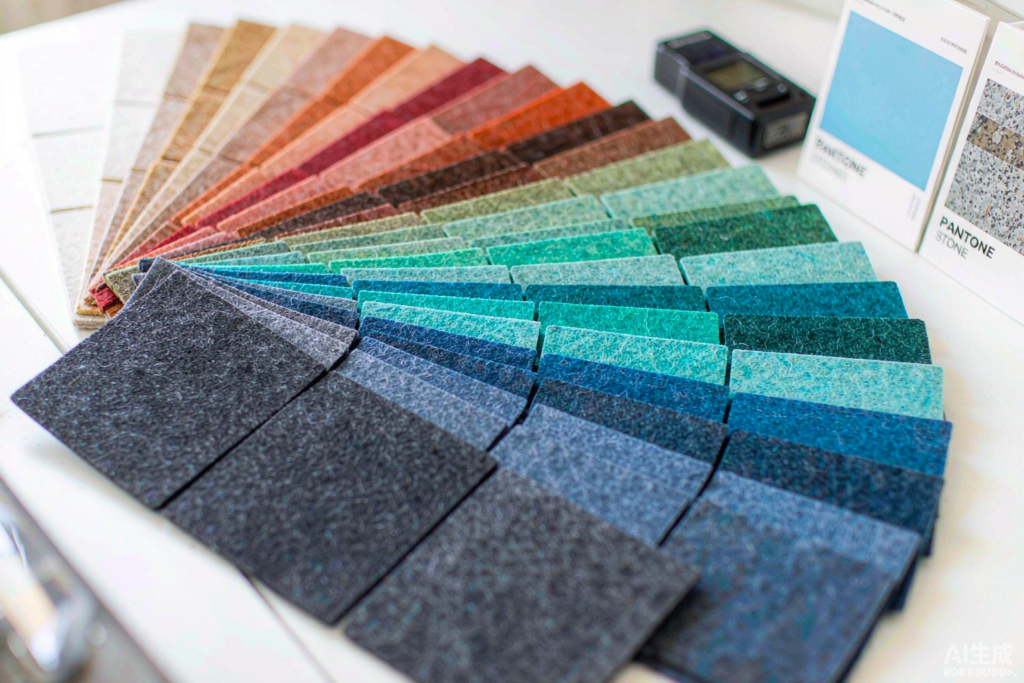
Color is why architects choose PET felt — dozens of stable, saturated tones that turn absorption into design. Color is also the property most likely to generate a warranty conversation five years later: “the panels near the window look different from the ones on the north wall”. Colorfastness and UV stability decide whether that conversation is a compliment or a claim. Here is what actually happens to felt colors over time, which tests predict it, and how buyers should specify against fading.
The real-world fading risks, ranked
Indoor PET panels face a short list of color threats, and they are not equally severe:
- Direct sunlight through glass. The dominant risk. South- and west-facing glazing concentrates UV and visible light onto panel fields for hours daily. Solution-dyed polyester is among the more UV-stable colorations available — far better than piece-dyed fabrics — but no polymer color survives years of direct sun unchanged.
- UV-rich lamp environments. Older halogen and some high-output LED installations in retail windows can accelerate fading locally — a niche but real case in shopfronts and sunrooms.
- Chemical exposure. Cleaning agents, ozone-rich equipment rooms and airborne kitchen residues can shift certain tones, especially pastels — a cleaning-protocol issue more than a material flaw.
- Differential fading. The most common complaint is not absolute fade but uneven fade: panels in shade stay original while sun-exposed zones lighten, making the wall look patchy even at modest color change.
- Solution dyeing. Pigment enters the polymer before extrusion — color is throughout the fiber, not coated on it. This is why quality PET felt fades slowly and evenly rather than bleaching at the surface.
- UV-stabilized masterbatch for premium palettes and any product destined for sunrooms, conservatories or storefronts.
- Batch control. Dye-lot records, retained samples and spectrophotometer checks keep reorder panels matching originals years later — the other half of the color promise.
- Declare the environment. Tell the supplier where panels will face the sun; exposure-appropriate coloration is a selection decision, not an upsell trick.
- Get grades in writing. Light fastness ≥ 6 (blue wool) and a stated ΔE limit after a defined exposure period belong in the purchase specification.
- Design for the sun. In glass-walled rooms, prefer mid-tone colors (fading shows least), specify solutions-dyed lines, and consider shading as part of the acoustic package.
- Keep retained samples. A dated sample from the delivered batch is the reference that makes any future comparison objective instead of argumentative.
- Request the actual test report: exposure hours, light source, measured delta-E.
- Reds and blues drift fastest; greys and greens hold tone longest.
- Approve samples under project lighting, not showroom lighting.
- Archive the approved sample and specify batch retention for phased projects.
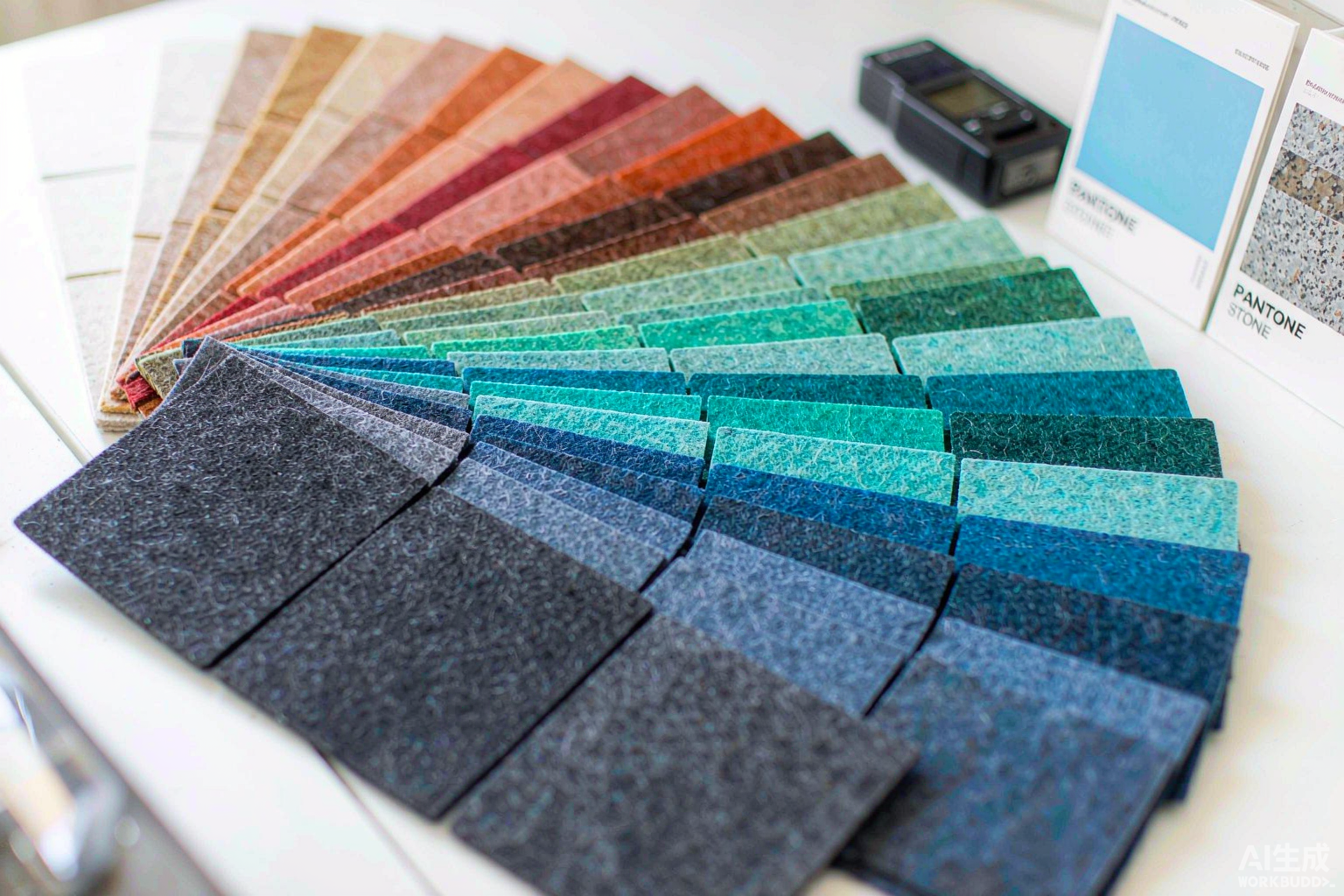
The tests that actually predict performance
Two test families matter. Light fastness (ISO 105-B02 or the equivalent AATCC 16) exposes samples to controlled xenon-arc light and rates color change on the blue wool scale 1–8; grade 6–7 is the professional target for interior products expecting sun exposure. Color measurement (CIELAB ΔE) quantifies shift numerically: ΔE below 2 is visually near-identical, 2–4 is noticeable side-by-side, above 4 is an obvious change. Buyers should ask suppliers for light-fastness grades and ΔE limits after defined exposure — numbers that turn “our colors are stable” into a checkable claim.
How good manufacturers keep color stable
Colorfastness is decided upstream, in production discipline:
Specifying against fade: the practical checklist
The honest summary
Quality PET felt is one of the more color-stable interior materials available — solution-dyed fiber holds tone for years in normal interiors. Fading risk concentrates where intense sunlight meets saturated color for years, and it is manageable with the right product choice and a written specification. Buyers who ask for test grades, keep retained samples and design with the sun in mind will find that color stays a selling point rather than a warranty line.
What Accelerated Aging Tests Actually Show
Laboratory exposure tests compress years into weeks: xenon-arc weatherometers cycle panels through intense light, heat, and humidity, then compare colour against the original under standardized illumination. For well-formulated PET felt, results are reassuring – high-quality panels typically retain colour within a small delta-E tolerance after the equivalent of years of indoor exposure. The variables that separate products are pigment quality and fibre stabilisation: panels coloured with inferior dyes shift measurably faster, most visibly in reds and blues, which drift toward muted tones long before greys and greens do. Buyers comparing suppliers should request the actual test report – exposure hours, light source, and measured delta-E values – rather than a marketing claim of UV resistance without numbers.
Installation context modifies everything. A panel behind north-facing glazing in Helsinki ages nothing like the same panel in a glass-roofed Dubai atrium. Solar heat compounds photochemical fade; some polymers embrittle under sustained high temperatures as well as discolouring. For high-exposure installations, mitigation is straightforward: specify darker or low-saturation colours, which show drift least; position the most vulnerable surfaces out of direct beam; and schedule a colour audit at the one-year mark, comparing installed panels against the archived reference sample so any drift is caught while the batch can still be matched.
A Buyer’s Verification Checklist
Four verifications protect a colour-critical project. One: obtain the colorfastness test report and read the exposure conditions, not just the pass mark. Two: approve a physical production sample under the project’s actual lighting – showroom lighting flatters every colour. Three: archive the approved sample with both the supplier and a third party, establishing the reference for any future dispute or re-order. Four: for large phased projects, specify batch retention, asking the manufacturer to hold production records and colour standards for a defined period. These steps cost little and eliminate the two most expensive failures in coloured acoustic products: a wall that visibly drifts from its neighbours within two years, and a phase-two order that arrives a tone apart from phase one. Suppliers confident in their formulation welcome the discipline; the questions themselves sort the market.