

You have a drawing, a target price and a completion date. Then the quotation returns with “custom size — POA” on half the line items, no tolerance, and no statement of which dimensions are actually achievable. Sourcing OEM acoustic panels custom sizes is where many straightforward projects stall: buyers assume a factory can change any catalogue dimension, while the factory assumes the buyer accepts standard modules. The gap between those assumptions is where cost overruns and delayed submittals are born. This guide closes it. It is written for architects, acoustic consultants, main contractors, distributors and purchasing managers who need to know, before issuing an RFQ, which parameters a factory can change, what each costs, and what tolerance it can honestly hold.
We are a supplier-side technical team, so this is not a consumer DIY piece. It is the same scoping conversation we have with B2B buyers each week, organised so you can turn it into a specification and an enquiry suppliers can price accurately. Figures described as indicative are early-planning ranges only; the formal quotation, its schedule and its attached test documents are always the controlling source. For product context, see the PET felt and fabric panel category.
What “custom” actually means in a panel quotation
In acoustic manufacturing almost nothing is made to one universal size. What buyers call “standard” is the set of modules a factory produces repeatedly, with tooling, cutting nests and cartons already optimised around them. A “custom” panel is any deviation: a different width, length, thickness, groove pitch, edge detail, colour, printed graphic or fixing. Some deviations are trivial, others need new tooling or a fresh approval sample. Treating them all alike is the most common source of surprise in an OEM order.
A useful definition separates three tiers. Tier one is cut-to-size: the construction is standard, the sheet is cut to your dimensions. Tier two is modified construction: thickness, density, facing or backing changes while the method stays the same. Tier three is new tooling or assembly: a bespoke groove, a new mould or a fixing system needing development. Each tier carries a different setup cost, minimum quantity and approval step. When you ask for custom acoustic panels, the first question a supplier should ask is which tier you mean.
Customisable parameters: what a factory can really change
Most panel families have a stable core construction with a handful of adjustable variables. Understanding which sit in which tier lets you design within the process. The table summarises the practical position for decorative PET felt and wood-slat panels, the two families most often ordered under an OEM agreement. All ranges are indicative and must be confirmed against current factory capability and your formal quotation.
| Parameter | Indicative adjustable range | Tier | Cost driver |
|---|---|---|---|
| Width / length | Cut-to-size within sheet or billet limits | 1 | Nesting, waste, carton |
| Thickness | Stocked gauges rather than any value | 2 | Core stock, bonding |
| Density / grade | Decorative to high-density acoustic | 2 | Material, retest |
| Slat pitch | From existing tooling where possible | 2-3 | New tool or CNC programme |
| Groove / perforation | Standard or developed pattern | 3 | Tooling, trial, approval |
| Colour | Stocked card, then custom match | 2-3 | Dye lot, MOQ, lab dip |
| Printed graphic | Artwork on a stocked face | 2-3 | Print setup, proof, waste |
| Edge / corner | Square, chamfer, mitre from standard tools | 1-2 | Secondary operation |
| Backing / air gap | Felt backing, cavity depth, mounting | 2 | Material, acoustic docs |
| Packaging | Branded cartons, labels, inserts, barcodes | 2 | Plates, MOQ, labour |
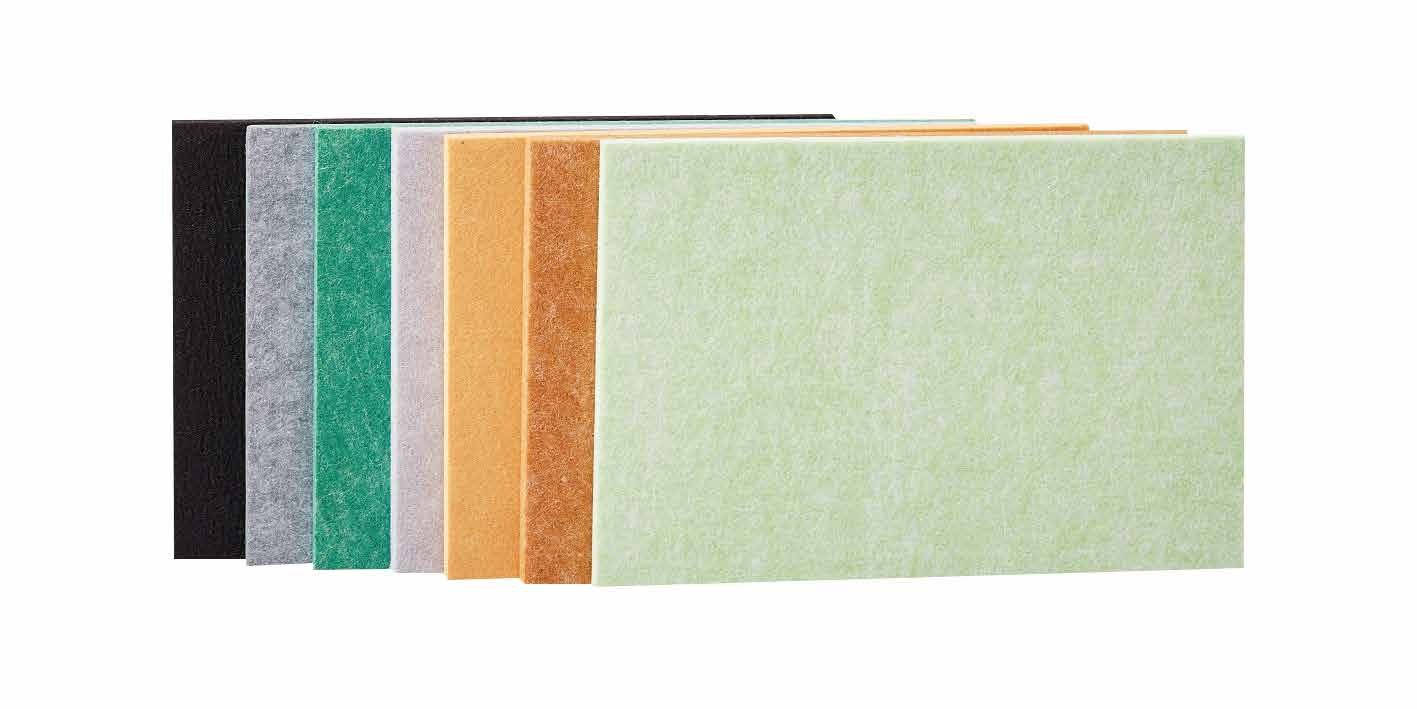
The pattern is simple: the closer you stay to a stocked gauge, colour and tool, the more the order behaves like a standard one. Bespoke slat panel dimensions are very achievable, but the cost sits in waste and setup rather than the cut itself. Colour illustrates this: our stocked range is documented on the custom colour acoustic felt panel page, while a true custom match follows a lab-dip approval path. Printed faces are a separate design service; see the printed acoustic felt wall panel page for finishes that can be applied to a custom-sized substrate.
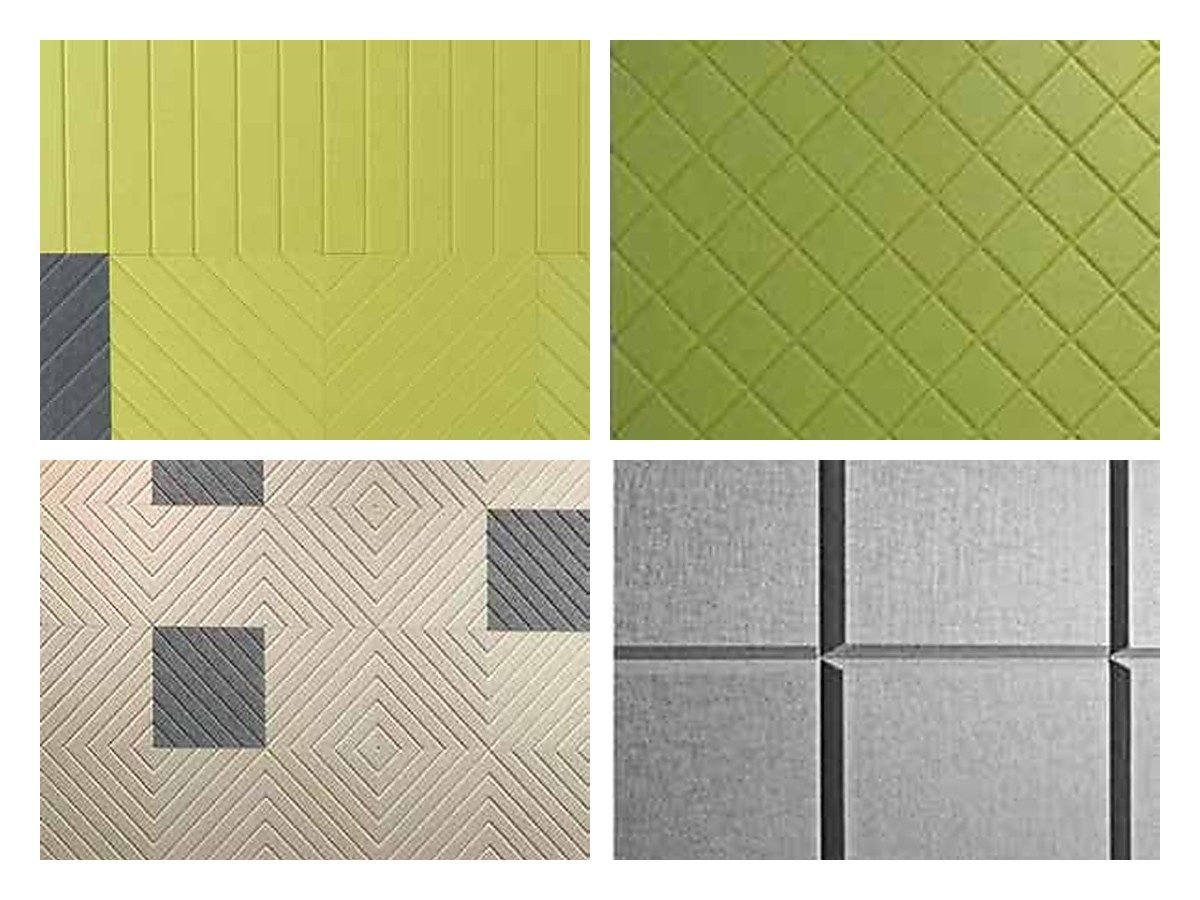
Standard modules versus bespoke slat panel dimensions
Standard modules exist because panels are rarely installed alone. They are set out on a grid, cut around services, and coordinated with ceiling tiles, lighting and sprinklers. A module that divides cleanly into the room geometry reduces waste and simplifies setting out. When you request bespoke slat panel dimensions, the technical question is not “can you cut it?” but “does the grid still land on sensible boundaries at the corners?”.
For wood-slat panels the dimensions that matter are overall size, slat pitch and backing cavity depth. Changing overall size is usually a tier-one cut; changing pitch may push the order into tier three because spacing is tied to a tooling set. For PET felt panels, sheet size governs: a panel larger than the stocked sheet needs a joint or splice, which an unprepared buyer will see as a defect on site. Ask the supplier to state the maximum single-piece size before you finalise the drawing, and how the panel should be joined where the drawing exceeds it. Design with standard modules where the room allows and reserve true bespoke sizes for visible feature zones. This keeps the bulk of the order low-risk and simplifies spares, because a project built on stocked modules can be replaced years later without reopening tooling.
Tooling and setup charges: when they apply
Custom panels are not expensive because the material is rare; they are expensive when a machine must be reconfigured for a short run. Setup covers everything before the first good panel: a new cutting nest, a tool change, colour matching, a print file, a sample carton and a trial batch to confirm dimensions. On a small order that cost is spread over few panels; on a repeating program it is negligible. This is why an OEM agreement with scheduled releases often prices better than a one-off custom order of the same panel.
You can reduce it without losing the design. Keep the construction constant and vary only cut size where possible. Group custom items into one production window. Choose a stocked colour or print substrate when the design permits. Ask for the setup charge as a separate line so you can see whether it is a one-off tooling fee or a per-batch charge; a separated line lets you judge whether the custom feature is worth it. Indicative charges vary widely, so this guide quotes no figure. Insist on a written statement of whether tooling is buyer-owned, retained by the factory or shared. For private label acoustic panels, your artwork, article numbers and carton design should be named in the agreement, along with who owns any tooling paid for under it.
Tolerances: what to specify and what is realistic
A drawing reading “all dimensions +/- 0.5 mm” on a large decorative panel is a red flag: it asks for a machining tolerance on a substrate that moves with humidity. Over-tight tolerances do not produce better panels; they produce rejections, longer lead times and a higher price. Tolerance only what affects installation — overall size, squareness, and fixing-point or joint positions.
For decorative PET felt and wood-faced panels, an indicative cut-size tolerance is a few millimetres on large panels, with tighter control possible on small repeat parts. Thickness tolerance depends on stocked gauge and bonding; edge straightness and squareness should be explicit because they govern the visible joint. Ask the supplier to confirm tolerance on the finished assembly, not the raw sheet, and to state measuring conditions — a panel measured dry in a factory differs from one on a humid site. Put the tolerance on the schedule, not in an email, alongside nominal size, measurement datum and an acceptance standard for colour and surface appearance. For a natural veneer or dyed felt, “exact colour match” is not measurable; a reference sample under agreed viewing conditions is. Application guides under solutions follow the same supplier-side approach.
From drawing to approved prototype
A custom-panel program needs a short, explicit approval chain. Skipping a gate to save a week is the fastest way to lose a month later. A robust chain has five gates, each ending in written approval before the next begins.
- Enquiry and feasibility. Send sizes, quantities, construction intent and target documents; the supplier confirms what is achievable and states any maximum one-piece size.
- Quotation and specification freeze. Units, tolerances, finish references, packaging and commercial terms are fixed in the document the factory builds to.
- Sample or prototype. A representative panel of the actual custom construction — not a generic stock sample — is produced and checked against the drawing.
- Approval and record. You approve in writing and both sides retain a reference that becomes the acceptance standard for production.
- Production and pre-shipment check. The first batch is measured against the approved sample and schedule before packing.
Branding, documentation and intellectual property form a sixth, commercial gate. Your artwork, article numbers and carton design should be named in the contract, along with ownership of any tooling paid for under it. Ask for the data sheet and installation guide to be issued under your product references while the underlying test reports remain available for project files. We do not manufacture certificates and quote no certification numbers here; your supplier should provide the actual report for the exact assembly you are buying.
Where custom sizes earn their cost
Custom sizes are justified when the panel is part of the architecture rather than applied to it: floor-to-ceiling feature walls, curved soffits, reception backdrops around signage, or dividers cut to a desk layout. The saving is not in the panel but in avoiding visible joints, filler pieces and on-site cutting that compromise the acoustic and fire performance of the assembly. They are less justified in large repetitive areas such as open-plan ceilings or long corridors, where a stocked module on a regular grid performs as well and arrives faster. Categorising the project — feature zones custom, background zones standard — is the most effective way to control an OEM budget and produces a cleaner submittal with a limited number of clearly sized panel types.

An RFQ checklist for OEM acoustic panels custom sizes
A good enquiry lets the supplier reject the impossible and price the possible accurately. Copy this into your RFQ and attach it to the drawing set; the goal is comparable quotations, not paperwork.
- Building type, room, and whether the panel is wall, ceiling or free-standing.
- Panel type schedule: nominal size, thickness and quantity per type.
- Stated tolerance and measurement datum for each critical dimension.
- Core, facing, backing and finish by grade or approved sample reference.
- Colour: stocked card number, or a physical sample for custom matching.
- Acoustic and fire documents required, with mounting condition stated.
- Fixing method and any substrate or cavity-depth restrictions.
- Branding scope: logo, article numbers, cartons, labels, inserts, documents.
- Setup charges shown separately, with tooling ownership stated.
- Sample requirement, approval gate and target delivery date.
- Incoterm, destination, packing method and inspection requirement.
Send the same checklist to every supplier you invite to quote. When answers return in the same structure, differences in scope become visible. Full product and documentation ranges are on the resources page.
Common mistakes when ordering custom acoustic panels
The first mistake is specifying a custom size before confirming the maximum one-piece dimension: the drawing looks right until production reveals a needed joint. The second is treating NRC or a fire class as a property of the panel in isolation; both depend on the complete assembly and mounting condition, so changing thickness, backing or cavity can change the result. Ask for the report scope, not just the headline class. The third is approving a generic sample — a stock sample proves the factory can make a panel, not that it can make yours. The fourth is leaving tolerance undefined then rejecting a batch on site for variation inherent in the material. The fifth is underestimating the approval calendar: colour, print and tooling gates run sequentially, not in parallel. Work backwards from handover and fix the sample approval date first.
Request a quote for OEM acoustic panels custom sizes
To scope a custom-panel program, send the drawing set, schedule and checklist to the MST Acoustics quotation team. We will confirm which dimensions and constructions are achievable, separate setup charges from unit pricing, and return an indicative schedule with approval gates shown. If you are still comparing options, download the catalogue and technical documents from the resources page first. All indicative figures here are for early planning only; confirm every price, tolerance, classification and lead time in the formal quotation issued for your project.
Frequently asked questions
What does OEM mean for acoustic panels in a B2B project?
It means panels produced to your specification and supplied under your brand or article references. In practice it covers custom sizes and constructions, colour or print matching, branded cartons and labels, and documents issued under your product names. The construction and its test documents still come from the factory, so the assembly you order must match the assembly described in those reports.
Can a factory make acoustic panels in any custom size?
Not any size. Every product family has a maximum single-piece dimension set by sheet or billet size; very large panels need a joint or splice. Cut-to-size within those limits is straightforward; changing tooling or construction is separate. Send your schedule early and ask the supplier to confirm the maximum one-piece size before you finalise the drawing.
How do custom sizes affect acoustic and fire performance?
Panel size alone changes little, but changes that often accompany a custom order — different thickness, density, backing felt or cavity depth — can change both absorption and the fire classification of the assembly. Always request the test report describing the exact build-up and mounting condition you are ordering, rather than relying on a headline rating from a different construction.
Why is there a setup charge on a custom acoustic panel order?
Setup covers the work before the first good panel: new cutting nests, tooling changes, colour lab dips, print proofs, sample cartons and a trial batch. On a short run it is spread over few panels; on a repeating program it is negligible. Ask for it as a separate line and clarify whether it is a one-off fee, a per-batch charge, and who owns the tooling.
What tolerance should I specify for bespoke slat panel dimensions?
Tolerance dimensions that affect installation — overall size, squareness and fixing-point positions — rather than applying one tight number to everything. Decorative panels from natural or fibrous substrates cannot hold machining-level tolerances on large sheets. Indicative cut-size tolerance is a few millimetres on large panels; confirm the exact value and measuring conditions with your supplier.
How long does prototype and sample approval take for a custom panel?
It depends on how many new gates the design introduces. A cut-to-size sample is quickest; a custom colour adds a lab dip, and a printed or newly tooled panel adds an artwork proof or trial run. These gates run sequentially, so work backwards from your handover date and fix the approval date before committing to production.